

Bombing in Dale | 8 February 1945
On Thursday, 8 February 1945, the hamlet of Dale near Aalten was shaken by a devastating bombardment. While rumours of the approaching end of the Second World War brought hope, tragedy struck. Eleven people, including young children and those in hiding, lost their lives.
A fatal mistake
That day, thirty-three American B-26 Marauder bombers dropped their deadly load over Elshoek and Grevink. It is presumed that the pilots believed they were still over German territory when they released their bombs. In the area stood barns and a chimney belonging to the Driessen bleachery. This may have been mistaken for German industry. A mistake with catastrophic consequences…
Chaos and agony
The hundreds of fragmentation bombs dropped sowed death and destruction. The many splinters flew horizontally across the ground, and many people and animals were hit by the shards. It was a shocking and bizarre scene. The bewilderment was immense, the grief immeasurable. A cacophony of inhuman screams and bellows from humans and animals in fear and mortal agony. Everywhere lay the remains of horses, cows, sheep, chickens, and geese. Some animals were still alive and had to be put out of their misery on the spot.
Emergency services, doctors, and nurses were immediately directed to the disaster area. First medical care was forced to take place in the field. The wounded were treated on-site in the mud. Using ladders, handcarts, and horse-drawn wagons, the injured were taken to ‘Huize Avondvrede’ on the Hogestraat. From there, the seriously wounded were transported to the emergency hospital in Harreveld.
Affected farms
The bombardment ultimately claimed eleven lives and left several others disabled for life. The impact on specific families and farms was profound:
-
’t Olde Nooitgedacht (Neerhof family): Joop de Rhoon (18), in hiding from Rotterdam, was found dead in the kitchen.
-
De Gliewe (Hogenkamp family): Daughter Anna (22) and sons Herman (15) and Jozef (6) perished here. Only six months earlier, the family had lost son Johan (17) to diphtheria.
-
Beekenhuus (te Grootenhuis family): This farm was completely destroyed. Four victims were mourned here: children Arie (12) and Teun (10) te Grootenhuis, and brothers Hendrik (33) and Gerrit (26) Stronks, who were in hiding there.
-
’t Nooitgedacht (Eppink family): Mink van der Harst (25), in hiding from Scheveningen, was fatally struck by shrapnel outside.
-
Brus family farm: The 62-year-old Gerrit Brus died immediately. His wife Sientje Brus-Stronks (63) succumbed to her injuries a few days later in the emergency hospital in Harreveld.
List of victims and cemeteries:
- Anna Hogenkamp (22) – Roman Catholic Cemetery Piet Heinstraat, plot A13
- Herman Hogenkamp (15) – Roman Catholic Cemetery Piet Heinstraat, plot A13
- Jozef Hogenkamp (6) – Roman Catholic Cemetery Piet Heinstraat, plot A13
- Arie te Grootenhuis (12) – Old Cemetery Varsseveldsestraatweg, grave 68
- Teun te Grootenhuis (10) – Old Cemetery Varsseveldsestraatweg, grave 68
- Hendrik Stronks (33) – Old Cemetery Varsseveldsestraatweg, grave 570
- Gerrit Stronks (26) – Old Cemetery Varsseveldsestraatweg, grave 570
- Joop de Rhoon (18) – Berkenhove Cemetery, grave 370
- Mink van der Harst (25) – Berkenhove Cemetery, grave 371
- Gerrit Brus (62) – Berkenhove Cemetery, grave 372
- Sientje Brus-Stronks (63) – Berkenhove Cemetery, grave 372
Monument
Shortly after the tragedy, Jan te Grootenhuis, who had lost two young brothers, piled up stones from the foundations of the destroyed Hogenkamp house as a makeshift monument. Jan emigrated to Canada in the 1950s but returned to Dale regularly.
When he visited Dale again in 1987, he discovered that ‘his’ little monument had disappeared during land consolidation. The stones had been secured by neighbours. Shortly after, an initiative was taken to create a permanent monument. In 1988, Jan te Grootenhuis unveiled the lasting memorial on the corner of the Grevinkweg and the Aladnaweg, where Mayor Tijmen Bouwers laid the very first wreath.
Sources:
- Als ik ze maar eens weer kon zien (Hans de Beukelaer)
- Aalten in Oorlogstijd (J.G. ter Horst)
- Er op of er onder (G.W. Vaags)
- War diary Peter van Essen
- Interview Karel Aversteeg (Louis Veldhuis and Gerrit Nijman)
- © Collection Nationaal Onderduikmuseum Aalten
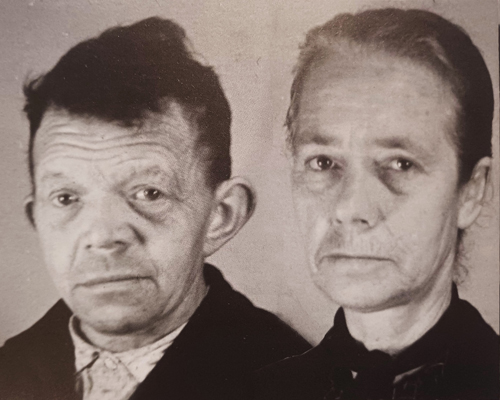
Gerrit Brus (62) and Sientje Brus-Stronks (63)
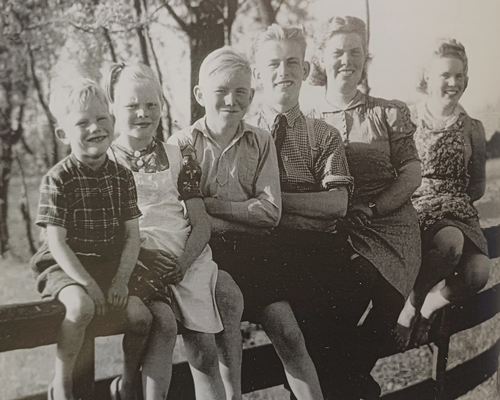
Anna Hogenkamp (22), Herman Hogenkamp (15), Jozef Hogenkamp (6)
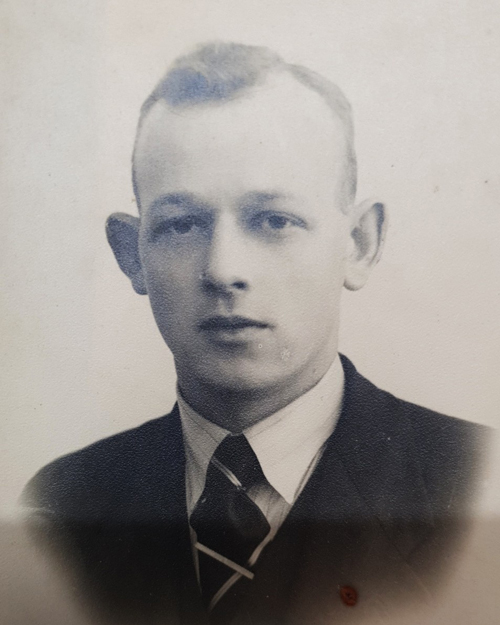
Mink van der Harst (25)
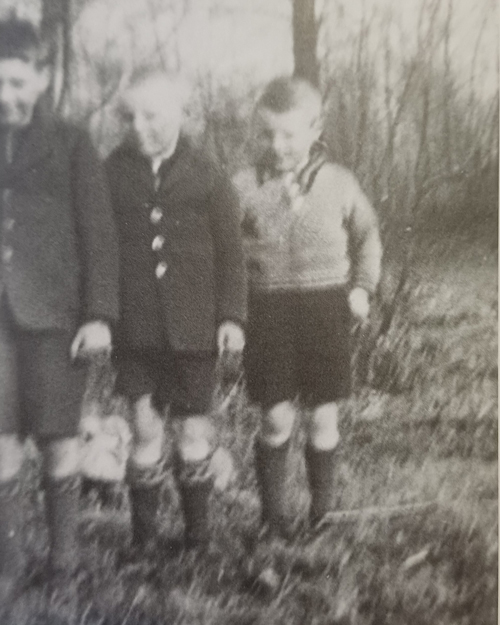
Arie te Grootenhuis (12) and Teun te Grootenhuis (10)