

Jan Rijks
(Bredevoort, 1922)
Member of the 3rd Company DNB
Assisted in the Betuwe with, among other things, the clearing of explosives
Hendrik Jan (Jan) Rijks was born on 9 January 1922 in Bredevoort at Landstraat 8. He was from the second marriage of his father to Hendrika Sophia Piek (*1893), from which seven children were born. From his father’s first marriage, there were already four children: Gerrit, Gijs, Nel, and Appie. The children from the second marriage were Hendrikus, Jan, Theo, Daatje, Riek, Herman, and Johan.
After father Rijks passed away in 1933, the mother was left behind with this large family. Father Rijks had been the sexton of the Reformed Church; this work officially passed to an older brother of Jan, but in practice, it came down to Jan doing the work.
At the outbreak of World War II, the family (four or five children had since left home) lived in part of the premises at Landstraat 8. A drapery business and a joinery with a shop were established in the building. There were regular boarders in another part of the building, which contributed to the income. Jan Rijks was, like his father and grandfather, both organist and sexton of the Reformed Church in Bredevoort.
Hiding and Escape
There was a secret space in the attic of the building where the sons of the family regularly went into hiding because they did not want to participate in the Arbeitseinsatz (labour service). A friend of Jan, Willem te Brinke from Lichtenvoorde, also made use of this hiding place several times. Conversely, the brothers also hid with the Te Brinke family in Lichtenvoorde. During the war, they were once arrested by the Landwacht (paramilitary guards), but they managed to escape by running. Although a load of buckshot was fired at them and they later had to remove the pellets from their bodies themselves, they remained out of the hands of the occupier. Long after the war, Willem te Brinke married Riek Rijks, Jan’s sister.
Involvement in the Resistance
According to his daughters Helma and Martie, their father Jan was not involved in the resistance, as far as they were aware. However, archival records from the NIOD (an interview with Piet Leemreize) and a conversation between Ina Brethouwer and Johan Rijks (Jan’s brother) revealed that pilots were also hidden in the Reformed church of Bredevoort, after which they were taken to Lichtenvoorde. In both reports, the name Jan Rijks was specifically mentioned.
Participation in the Dutch National Battalion (DNB)
Jan was likely motivated by his friend Willem te Brinke to participate in the DNB after the liberation at the end of March 1945. Jan himself was less prominent than Willem, who was more fervent. They ended up in the Betuwe region with the 3rd Company, where they assisted with, among other things, the clearing of explosives. They were likely discharged in June or July 1945 and returned home.
After the Liberation
On 29 March 1951, Jan married Ria van Zuidam and started a family. They continued to live at Landstraat 8, where Jan took over the furniture sales. His mother and his sister, who had a disability, also lived in the building and ran the drapery business. Later, this business moved across the Landstraat, and even later his sister took over the business of “petten Oberink” at the Köstersbulte in Aalten.
Jan was socially very involved; he was one of the founders of the Bredevoort Traders’ Association (BREM), co-founder and chairman of the Prinses Margriet gymnastics club, and initiator of the Funeral Fund of the Reformed Church.
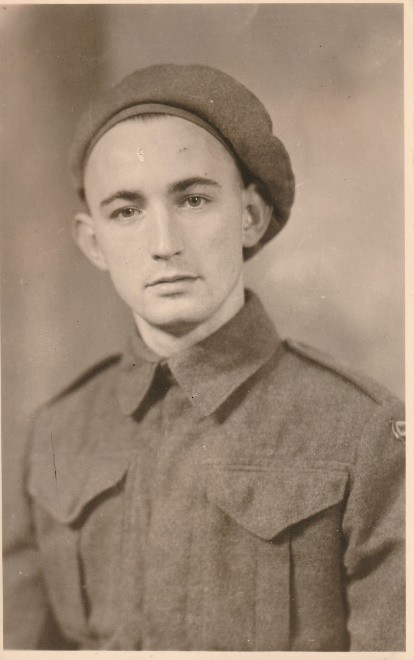
Jan Rijks