

Herman Bartelink
(Eibergen, 1902)
Member of the 3rd Company DNB
Resistance fighter, deeply committed to his Jewish fellow citizens in Eibergen
Herman Bartelink was born in Eibergen on 20 May 1902, the son of Hendrik Jan and Anneken Bartelink-Stegeman. He initially worked as a bricklayer. His mother ran a tobacco and cigar shop in the Kerkstraat in Eibergen, next to the Maas family’s Jewish butchery. After her death in March 1942, Herman took over the shop, but the connected small cottage consisting of only one main room and a bedroom remained empty. From October 1942, this cottage became the hiding place for Aaltje Maas-Herschel and several Jewish relatives.
Through his efforts to help Jews, Bartelink naturally became involved in the wider resistance. Together with the Jewish resistance fighter Bram Maas and the help of a few others, he began digging an underground shelter in the Hoonesbos woods (with the permission of the owner, G.J. van Heek). It was a significant undertaking. The space measured four by four metres, with a small entrance hall. The walls and ceiling were made of wood, and there was a hinged hatch at the top. The site was covered with sand, pine needles, and grass, making it extremely well-concealed. Initially, five people stayed there, never venturing outside during the day. Then came the betrayal.
By late March 1943, there were 22 Jewish men, women, and children in the hut. The numbers were far too high and the tension was unbearable. This overcrowding occurred because a warning had recently been received of an imminent raid. Herman Bartelink and his comrades desperately sought alternative hiding places to move them, but they were unable to do so in time. For the SS, it was a major ‘catch’. The victims were taken to Westerbork and then to Sobibor, where they were murdered on 9 April 1943.
The inhabitants of Eibergen were shocked and devastated. Following this disaster, Bartelink cleared the cottage in the Kerkstraat. Johan Leussenkamp and his wife moved in; Leussenkamp was a civil servant at the rationing office and a resistance fighter. He lived there for a year until he, too, was arrested.
During the final six months of the war, Herman Bartelink became a member of the Netherlands Forces Interior (Binnenlandse Strijdkrachten), active service in the village of Eibergen. Following the liberation of Eibergen, he enlisted in April 1945 as a member of the 3rd Company of the Dutch National Battalion. He returned home in June or July. Herman Bartelink married Wilhelmina H. Willems in Borculo in 1923, where their eldest child was born. Their subsequent five children were all born in Eibergen. Following the death of his wife in 1952, Herman married Anskje de Boer. He passed away on 17 January 1984 in Enschede.
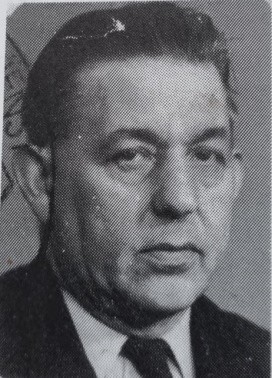
Herman Bartelink