

Guus Beckers
(Bredevoort, 1917)
Member of the 1st Company DNB
Assisted the Canadian Army during the liberation of the Veluwe
Augustinus Johannes Bernardus (Guus) Beckers was born in Bredevoort on 14 May 1917, the son of Johan Beckers and Bertha Elschot. His paternal grandparents were from Germany, and his father established a construction company in Bredevoort. Guus grew up with two brothers and four sisters. After primary school, he trained as a carpenter at the craft school in Winterswijk. This was primarily his father’s wish. His brother, who was one year older, also trained as a carpenter there. Guus himself had more of a passion for metalwork. He followed various evening studies, such as the Commercial Evening School, and worked in his father’s business.
Going into Hiding and Resistance
During the war, he worked for a construction company in the German town of Bocholt. When things became too dangerous for him there at the end of 1942, he went into hiding with the Wieggers family at the Oldpas farm in Zieuwent. This is how Guus met Marie Wieggers, his future wife.
The Wieggers family was deeply involved in the resistance. Hendrik Wieggers was well-known within the regional resistance, up to the commander of the Home Forces District 5 Gelderland. Guus Beckers also contributed to the underground movement in Zieuwent. Oldpas farm was like a beehive; countless people in hiding were taken in here over the years. Jews, foreign pilots, evacuees, young men, and even the mayor of Hengelo, Gelderland.
By the end of the war, 40 people were hidden there. Nevertheless, there was always enough food. Whenever ‘strangers’ arrived, the call was invariably “Where is Marie, where is Marie?”. She had to do the talking, always giving the same answers to questions. She was capable of this, but experienced terrible tension whenever there was another major house search. War plays with the mind; she continued to experience this throughout her later life. The Wieggers family helped others out of a sense of duty, at the risk of their own lives. Their credo was: resistance against the enemy is your duty as a patriot. At the end of 1944, Hendrik Wieggers transported the weapons from the second allied weapon drop in the Aaltense Goor to Oldpas by horse and carriage—an extremely heavy load of ironwork.
A raid followed, during which Guus and Hendrik quickly threw the weapons into the pond next to the farm. A German soldier fired at them with a sten gun but missed. There were several such situations that ended well.
Home Forces and DNB
In the autumn of 1944, Guus Beckers joined the Dutch Home Forces, combat division. After the liberation of Lichtenvoorde on March 31, Guus collected the hidden weapons at ‘Lodieks Tone’ and set out with an armed group to arrest Wehrmacht soldiers and members of the NSB (National Socialist Movement) and take them to Harreveld. He then reported to the 1st company of the Dutch National Battalion. He assisted the Canadian army in the liberation of the Veluwe, reaching Apeldoorn, Bunschoten, Amersfoort, Woudenberg, and Leusden. During that time, he wrote letters home. He had signed up for the army for six months but was able to leave as early as July 1945 because he was offered a job as a foreman/supervisor at N.V. Arnhem-Zuid Reconstruction. Guus and Marie were married in a civil ceremony in October 1945 and in the church in Zieuwent in November 1945. Their eldest son was born in Arnhem in 1946. They subsequently had six daughters and two more sons.
The war left a profound mark on Guus’s life. Firstly, the tense period in hiding and the resistance work in Zieuwent and Mariënvelde. Regarding his brother Johan Beckers, who was one year older and a Marine 1st Class from June 1941, the Beckers family heard nothing more after 1941. It only emerged later that Johan had been torpedoed by the Japanese in February 1942 on board the flagship Hr. Ms. de Ruyter and had disappeared to the bottom of the Java Sea. In February 1946, the parents received the official death notice from the Ministry of the Navy in The Hague. His uncle Heinrich Beckers (*1892) went missing in 1944.
After the war
In the spring of 1947, Guus moved with his family to Vorden in the Achterhoek. He began specializing in millwork at Ten Have (in Vorden and Aalten). In 1952, he established himself as an independent mill builder, ‘Beckers Molenbouw’, on Koppelstraat in the workshop of his father’s construction company in Bredevoort. In the summer of 1953, his family also moved to Bredevoort. The mill-making business was significantly expanded in 1963, including its own sawmill, and relocated to the industrial estate at Winterswijksestraat 61 in Bredevoort. His millwork company became a household name in the Dutch and international mill world due to his ingenious craftsmanship and the sail system he developed to improve streamlining. As a token of appreciation, he received a certificate of merit from ‘De Hollandsche Molen’, the Association for the Preservation of Windmills in the Netherlands.
Guus Beckers passed away on 11 April 1980 at his home on Koppelstraat in Bredevoort, in the municipality of Aalten.
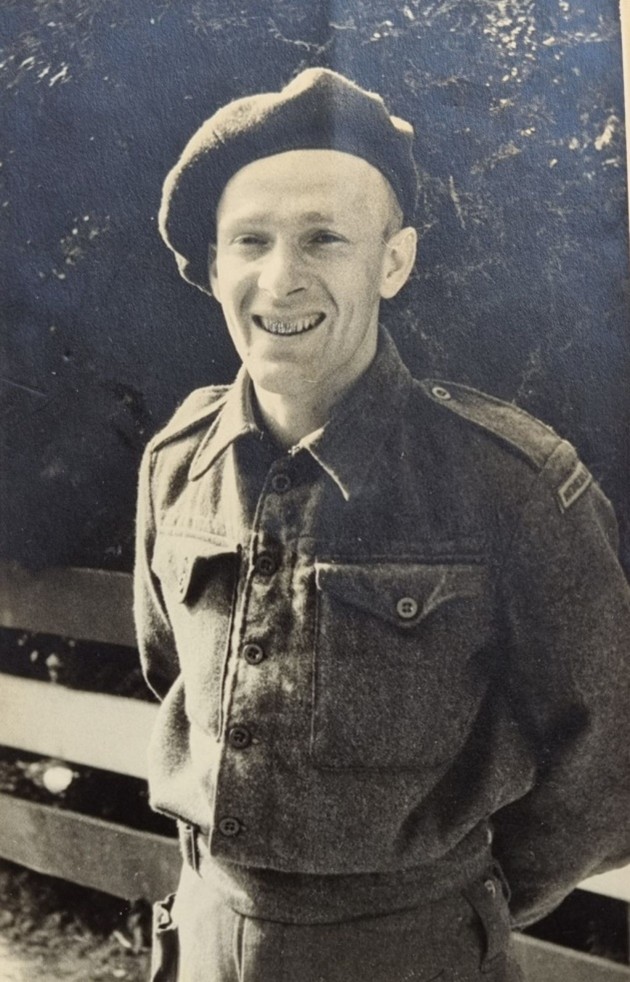
Guus Beckers