

Nico Oostelaar
(Apeldoorn, 1917)
Member of the 1st Company DNB
Sergeant Major Instructor of the De Bark resistance group
Nico Oostelaar was born in Apeldoorn on 3 March 1917, the second son of Derk and Clara Kramer. He entered military service and later became a florist. In May 1940, he fought as a soldier at Ypenburg airfield and in Rotterdam against the Germans.
In 1942, he became engaged to Rie van Zoest, after which he went into hiding. For six months he stayed in Terwolde, where he used the name ‘Jan Mulder’. His next address was a cowshed belonging to the Domhof family in Achter Zieuwent. Under the name ‘Gert Domhof’, he spent a year and a half learning how to sow and mow. He came into contact with fellow soldiers in hiding, Jan Ket and Henk van ’t Lam. In September 1944, they were among the first six members of the special combat unit at the De Bark farm in IJzerlo. They were later joined by another 30 men and two female prisoners.
Oostelaar became a Sergeant Major Instructor. The resistance group was responsible for the lynching of four Germans, a fatal mistake that left a mark on the rest of their lives. On 2 March 1945, 46 Dutch resistance fighters were executed by firing squad by the occupiers near Varsseveld. The members of De Bark all agreed to maintain secrecy. (*) (*)
Oostelaar was part of the assault group that drove the Germans away from the Polbrug in Aalten at the end of March 1945. In mid-April 1945, Oostelaar joined the 1st Company of the DNB. In July 1945, he enlisted in the Dutch army, tasked with clearing landmines.
In August 1945, he married Rie van Zoest in Aalsmeer. For ten years, they lived with Nico’s parents in Delft. As a childless couple, there was no separate housing available for them. Nico’s profession was ammunition expert at TNO Delft, where he worked until his retirement. Rie Oostelaar worked in a psychiatric institution for twenty years. In 1981, they moved to Wezep.
In 1995, they celebrated their 50th wedding anniversary in Wezep, followed by a second celebration in the Achterhoek. “Through my time there, I developed such a close bond with those people. It is very hard to explain, but I think that bond is almost closer than the one with family,” Oostelaar stated in a newspaper article. Nico Oostelaar passed away on 10 March 2010 in Wezep.
(*) Sixty-five years later – shortly before his death – Nico Oostelaar decided to reveal in a radio interview exactly what had happened at De Bark. In 1995, he also committed his memoirs to paper on the advice of his doctors (due to his war syndrome).
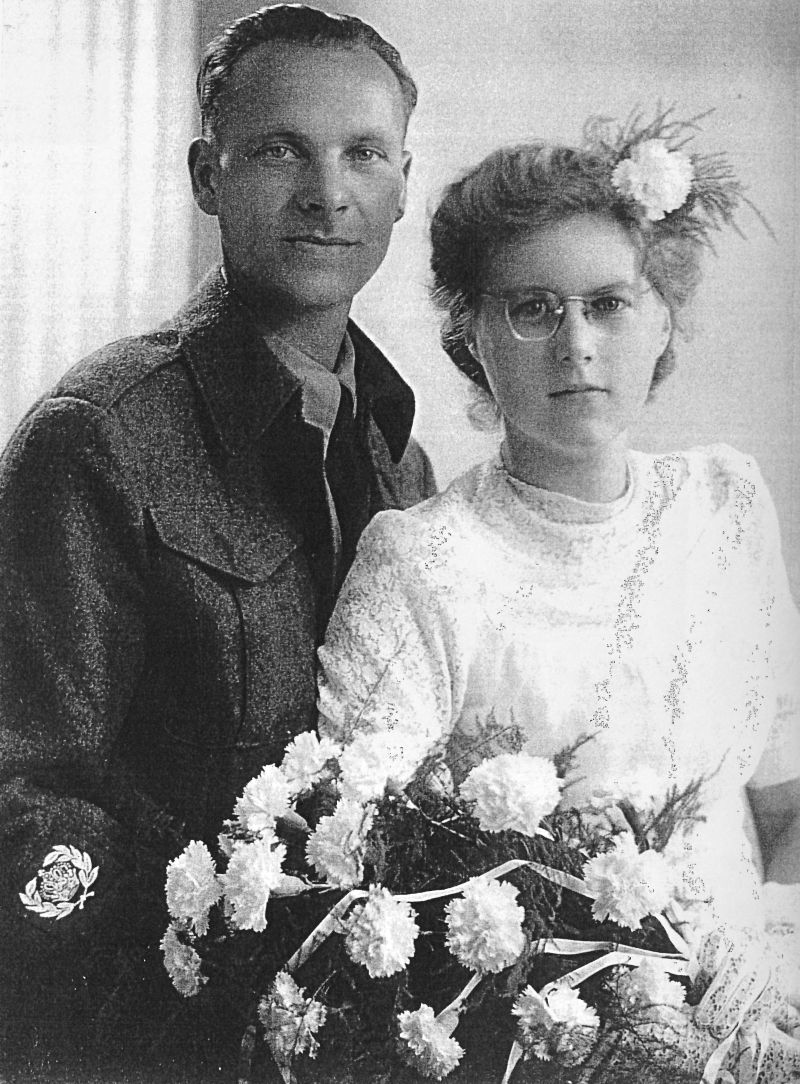
Nico Oostelaar (marriage 23 August 1945)