

Henk van ’t Lam
(Overveen, 1922)
platoon commander 1st company Dutch National Battalion
Henk van ’t Lam, alias ‘Lange Henk’, a natural leader with charisma
Hendricus Theodorus Ignatius (Henk) van ’t Lam was born in Overveen on 22 January 1922. His father was a gymnastics teacher at the Kennemer Lyceum and was appointed inspector for physical education by the ministry in April 1941. Henk attended the Maritime School in Den Helder. At the start of the war, he tried to sail to England, but this failed. Via the National Organisation for People in Hiding, he went into hiding in mid-1943 with the Duthler family in Varsseveld and subsequently at addresses on the Heelweg and in Zieuwent. Henk was part of the underground, which was active in Varsseveld, Aalten, and Zieuwent. He was friends with two resistance leaders from Varsseveld, Riep Knottnerus (son of the vicar) and the administrative official Maarten van Prooijen. These three men operated independently and cautiously to attract as little attention as possible. Henk had charisma; he was a natural leader who committed himself fully to his mission.
In September 1944, Henk van ’t Lam, alias ‘Lange Henk’, becomes a member of the Home Forces (BS) and forms his own armed platoon of six people in hiding and farmers’ sons. Jan Ket of the Aalten combat group asks him to merge this armed group with his own, plus a group in Zieuwent. This results in the creation of an assault platoon. The groups are stationed close to each other in farms around the Somsenhuis in IJzerlo. Lange Henk, together with Wim van der Veen and the Allied pilots Frank Dell and Joe Davis, spend three weeks training with weapons while in hiding. The farmers find this to be getting too dangerous. The group moves to an abandoned farm, De Bark in IJzerlo, and at one point numbers 35 people. Jan Ket, alias ‘Zwarte Jan’, is in command with Lange Henk as his deputy. The military training of the ‘Barkianen’ group is very strict. Zwarte Jan and he warn the Barkianen: if you are captured, you will be in a situation where you will betray others. Remember, the last bullet is for yourself! The group consists of former military personnel, seven Allied pilots, two Poles, a Frenchman, and two Alsatians (deserted Germans). When the first Allied weapon drop takes place in the Aaltense Goor at the end of October, Lange Henk receives instructions about the dropped weapons from the pilots in hiding. Lange Henk helps with the recovery of these weapons at various addresses.
At the end of February 1945, the tragedy of De Bark occurs. Three German officers and their driver are captured and asked to desert. They refuse, after which they are hanged. Three Barkianen drive the German staff car with the lifeless bodies to the border of Aalten and Varsseveld. An explosive charge is set, matches are lit, and there is one minute to get away. The intention is for everything to be incinerated, but that fails. The occupier’s retaliation is horrific: 46 resistance fighters from De Kruisberg prison are executed by firing squad at the Rademakersbroek on March 2, 1945. De Bark has already been evacuated. The sections then scatter to various locations. Lange Henk leaves with his section for the Te Lindert farm on the Heelweg. Weapons are still stored there and training for the Varsseveld resistance takes place. When German assault guns are billeted nearby, he asks GP Brinkman for a declaration of infectious disease around the farm. This allows the group to continue training. On March 29, Zwarte Jan’s courier comes to him with the order to return to IJzerlo. The Allied army is approaching. On the eve of the liberation, Lange Henk fights with ten combatants in the vicinity of the Slingebeek. During that action, he is wounded in an arm and a knee. He is cared for in the emergency hospital in Aalten for six weeks. On May 4, 1945, he reports to the Dutch National Battalion, more or less recovered from his injuries. The news of the capitulation arrives at the army that evening.
He married Antoinette van der Zijden. They went to live in Overveen, where three daughters were born. Henk van ’t Lam became director of a sports company that was part of De Bijenkorf in Amsterdam. Together with resistance friends, Van ’t Lam joined the ‘RAF Escaping Society’ in England. This led to a dedicated escape department in the Netherlands, which was also in contact with Prince Bernhard.
When Henk van ‘t Lam takes stock during an interview in the 1980s, he wonders if the tragedy of De Bark was necessary. He regrets it enormously. There were victims and chaos ensued, but the lives of Allied pilots and many people in the Achterhoek were also saved.
Van ’t Lam maintained contact with his comrades, particularly Jan Ket and Frank Dell. Around 1990, he visited Vera Lynn’s show in London together with Frank Dell.
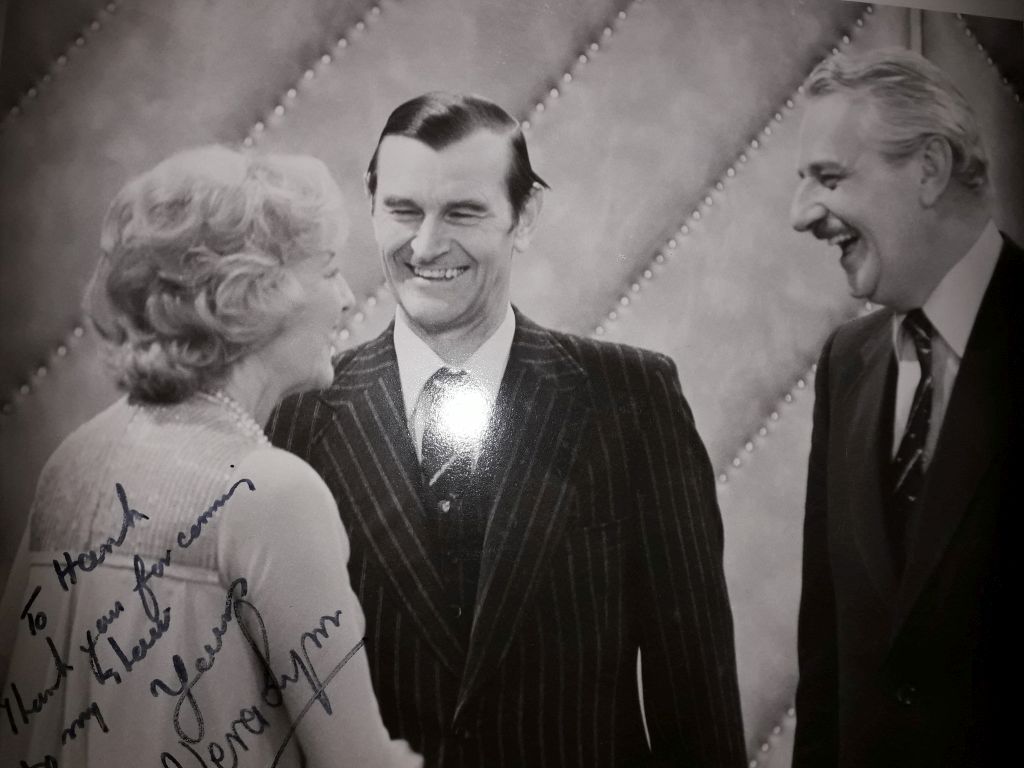
Vera Lynn, Frank Dell, Henk van ‘t Lam (1990)