
Doetinchem
The quest of Nico Brugman
Three-year-old Nico Brugman lives with his parents and five siblings on the corner of Boliestraat and Hoopensteeg. On 19 March 1945, his father was killed at the Nemaho factory by a bombing raid by British fighter planes.
Two days later, his sister Jenny was killed at the bakery during the major bombing of the city centre. His mother leaves that same night with two prams and the children to her parents in Eibergen. After the war she remarried and continued to live in Eibergen. The war is no longer talked about. All his life, Nico therefore does not know what happened.
At the age of 75, at the insistence of his daughter-in-law, he starts looking for answers. Only then does he get to hear the tragedy.
Interview Nico Brugman: https://www.youtube.com/watch?v=2GKRB8hgzwI
Nico Brugman’s quest: https://www.youtube.com/watch?v=YWo9x-ub4jw
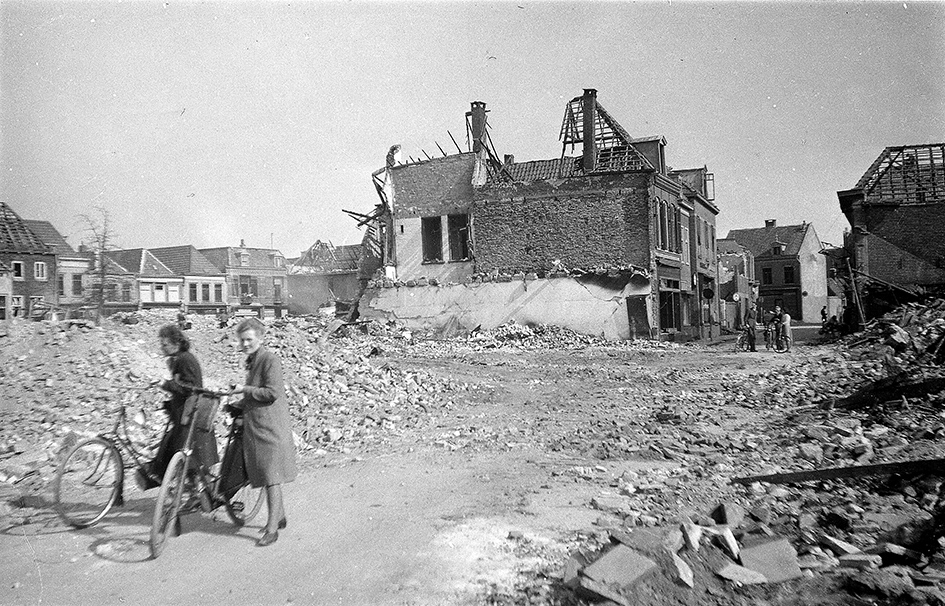
The destroyed Boliestraat after the bombing on 21 March 1945. On the left, on the corner of the Hoopensteeg, the house of the Brugman family is still standing.
Photo Jan Massink, Heritage Centre Achterhoek and Liemers
Bombing of Doetinchem
On 19, 21 and 23 March 1945, Doetinchem was bombed by Allied planes.
From mid-March 1945, the northern bank of the Rhine was bombed almost continuously by British and American aircraft. Not only in Germany, but also across the border in the Achterhoek. It is the introduction to the Rhine crossing: Operation Plunder.
On Monday morning, March 19, fighter-bombers bombed the Nemaho factory where German tanks and vehicles were being repaired. An ammunition depot in the Kruisberg woods and FLAK anti-aircraft guns around the city are also attacked. Two buildings in the center are also affected.
On Wednesday afternoon, March 21, many more bombs fell on the city center. Numerous buildings are hit and fires break out in several streets. The 18th-century town hall, the synagogue and the Catharinakerk also fell prey to the flames. In the evening, many flee the city. Then the church tower also collapses on fire.
On Friday afternoon, March 23, bombs fall again in several places in the center. Even then, there are more deaths.
In the night of 23 to 24 March, the Allies crossed the Rhine at Rees and Wezel. A week later, Canadian troops reach Doetinchem. A city that is one of the hardest hit cities in our country due to the destruction and more than 150 bombing victims.
A stained glass window has been installed in the Catharinakerk in memory of all civilians who died in the bombings in Doetinchem on 19, 21 and 23 March 1945.
Source: https://doetinchemherdenkt.nl/
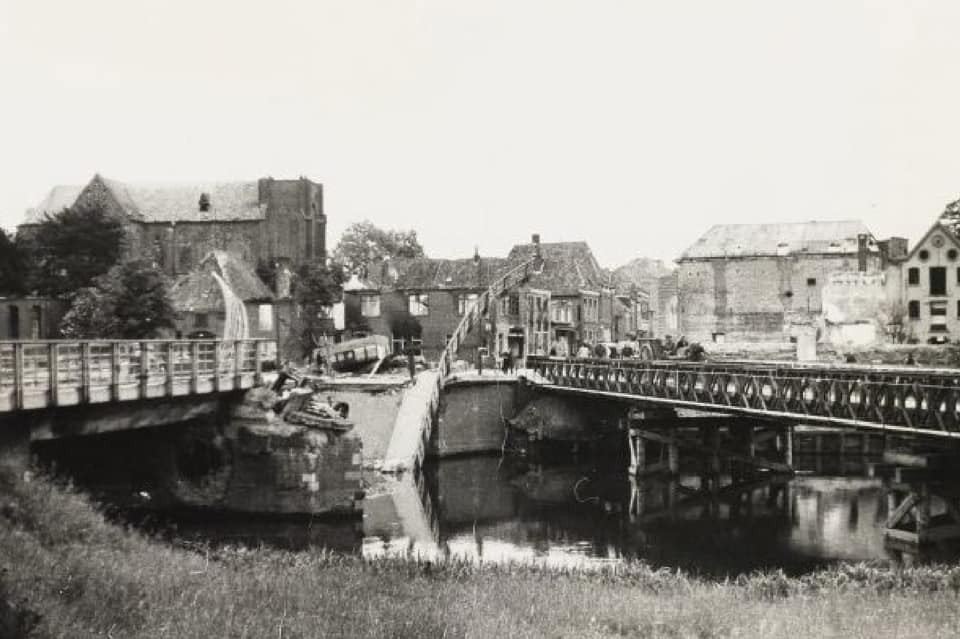
The ruined historic city center
The town hall, the synagogue and the Catherinakerk went up in flames
Freedom Monument
The Freedom Monument has been standing in the Mark Tennantplantsoen since 5 May 1995. The sculpture was made by Marius van Beek (1921-2003) and shows two chained hands. On the base is the text: Let freedom not die.
The park is named after the Canadian Major Mark Tennant of the Calgary Highlanders regiment that liberated Doetinchem on 1 and 2 April 1945. Eleven Canadians and dozens of Germans were killed.
Every year on May 4, the memorial is held at the memorial.
Source: https://www.4en5mei.nl/oorlogsmonumenten/zoeken/3090/doetinchem-vrijheidsmonument
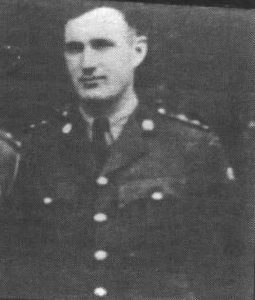
Mark Tennant, Major of the Cavalry Highlanders
Telephone network PGEM
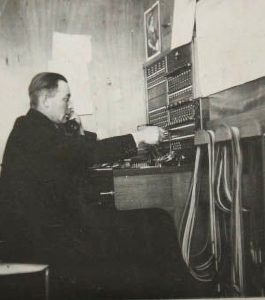
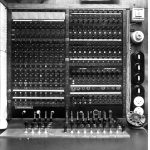
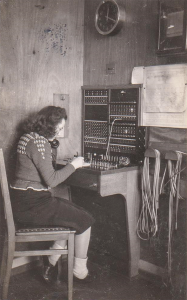
During the Second World War, communication is of great importance. Often even of vital importance. In order to pass on messages, the Dutch resistance has a nationwide illegal telephone network that consists of a chain of all kinds of networks and lines. The service telephone network of the Provinciale Geldersche Electriciteits-Maatschappij (PGEM), with a total length of 1500 kilometers and 900 telephone connections, is a crucial part of this. In this way, the resistance avoids the use of the public PTT telephone network because it cannot be tapped.
A network of telephone connections
There is a central post in the PGEM office in the Grutstraat. This is operated by the dispatchers Annie Luimes and Jan Griess. There are direct telephone lines with Apeldoorn and Arnhem. There is also a direct telephone connection with Nijmegen, a line that runs through the Ooijpolder via Millingen and Kekerdom. There are also direct lines from Doetinchem to Vorden, Winterswijk, Groenlo, Lichtenvoorde, Megchelen, ‘s-Heerenberg and Dinxperlo. Jan Griess has also installed various lines in the basement of his house on the Terborgseweg.
Important role during the liberation
When Nijmegen was liberated in September 1944, messages were sent from Doetinchem to the Allies in the PGEM power station on the Waal almost every day. Subsequently, the PGEM network played an important role in the escape routes through the Achterhoek of the forced labourers from camp Rees and during the liberation of the Achterhoek, including the siege of Doesburg.
Other important places and events in Doetinchem
The Kruisberg
Prison of the Sicherheitsdienst from 5 September 1944 to 27 March 1945
On 1 September 1944, the Germans requisitioned the re-education institution De Kruisberg. The Sicherheitsdienst then imprisoned about 150 men and women. Most of them are part of the resistance and have been labeled as Todeskandidat.
Transport Neuengamme
Of the 77 men who arrived in Neuengamme by train, only a few survived.
Mass execution Rademakersbroek
Mass execution Woeste Hoeve
After an attack by the resistance on SS man Hanns Albin Rauter at the Woeste Hoeve, another reprisal followed six days later. Now 25 men are being taken out of their cells. They were executed together with 92 others at the Woeste Hoeve.
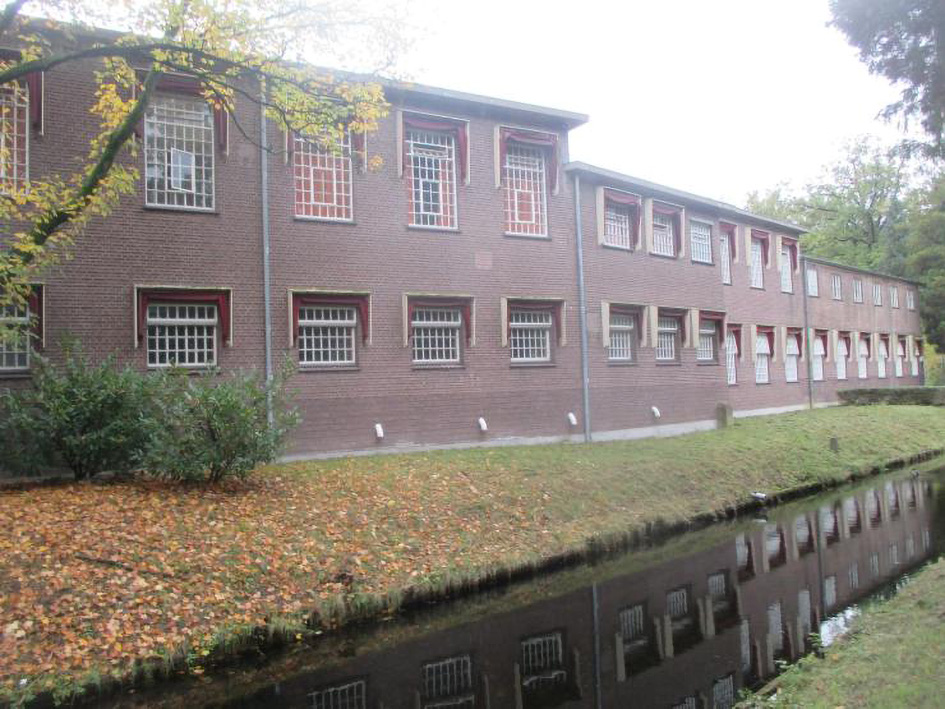
Photo: Doetinchem Commemorates Foundation
The Green of Prinsterer Nursery School
In the summer of 1944, the Germans obtained important scientific equipment from the Kamerlingh Onnes Laboratory in Leiden and the Physics Laboratory of the Free University of Amsterdam. They moved it to the Groen van Prinstererkweekschool in Doetinchem, in the Wilhelminastraat, which was renamed Thorbeckestraat by the Germans. In the school’s gymnasium, they set up a laboratory to do nuclear physics research.
A resistance fighter keeps a close eye on the building from a house next to the school. The information he collects is passed on to London via secret telephone connections.
In September 1944, when the Allies were advancing rapidly in the Netherlands, the Germans hurriedly brought the laboratory equipment to Germany by train. The building was then used as an emergency hospital where forced labourers from camp Rees were cared for.
On 21 March 1945, the Groen van Prinsterer training school, together with a large part of the city centre of Doetinchem, was destroyed by a British aerial bombardment. Many men who waited in the gymnasium to be deloused are killed.
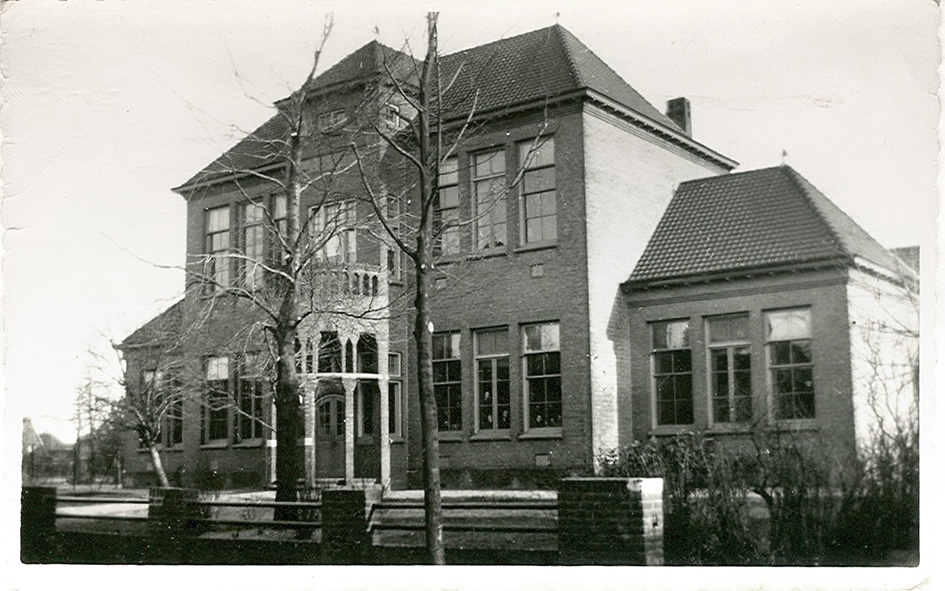
The Green of Prinsterer Nursery School, popularly known as De Groene