

The church raid in Aalten, 1944
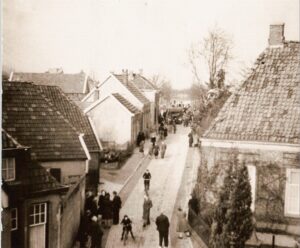
Berkenhovestraat in Aalten during the church raid on Sunday, 30 January 1944.
On Sunday, 30 January 1944, one of the most shocking events of the Second World War took place in Aalten, Gelderland: the church raid. While the faithful sat in their pews, the German occupier surrounded the church buildings. The goal? To hunt for young men for forced labour in Germany.
The raid was meticulously prepared by the German occupier. While services were underway in the Christian Reformed Church and the Reformed Western Church, the buildings were surrounded by the SS. The focus was on men aged between 18 and 23.
Despite attempts by ministers and organists to prolong the service — giving men a chance to hide in the traditional dress of Scheveningen evacuees or through secret hatches — 48 men were arrested.
From the Achterhoek to the camps
The journey the captured men from Aalten had to endure was horrific. After a short stay at the Koepel prison in Arnhem, most were taken to Camp Amersfoort. For many, this was just the beginning of an ordeal that took them deep into Germany, to concentration camps such as Neuengamme and prisoner-of-war sites like Sandbostel.
- Victims: Five men did not survive the hardships, bombings, and death marches.
- Impact: Survivors often returned with severe trauma (Concentration Camp Syndrome) and physical ailments such as TB.
Aalten’s unique position as a village of people in hiding
The church raid in Aalten was unique because it was the first time the Nazis desecrated a house of prayer for a mass arrest. The news even reached The London News, which wrote on 14 February 1944:
“AALTEN: A raid was held as people were leaving church. 50 people in hiding were caught! Going to church is therefore no longer safe. People should stay at home, though many will find that difficult.” From that moment on, people in hiding no longer attended church.
At the time, Aalten was already known as a village with a huge number of people in hiding (in a population of 13,000, there were about 2,500 people in hiding). This event left a deep wound in the close-knit community, where resistance and helping fellow human beings were central.
Commemorating at the Nationaal Onderduikmuseum
Today, the Nationaal Onderduikmuseum in Aalten keeps the memory of the raid of 30 January 1944 alive. The stories of men like organist Gert Nobel and Jan Tolkamp are preserved here to teach future generations about the value of freedom and the dangers of exclusion.
In the Eastern Church (Oosterkerk) in Aalten, a special memorial window, donated by former people in hiding, still serves as a reminder of the Biblical call: “Hide the outcasts; betray not him that wandereth.”