

Feitze de Vries
(Joure, 1921)
commander 2nd platoon of the 1st company
Serving as flank security for the Canadian army, this Achterhoek army liberated villages in the Veluwe from remaining Germans and NSB (National Socialist Movement) members
Feitze was born in Joure (Friesland) on 10 April 1921, the son of Yntze de Vries (a farmer) and Grietje Speelmans. In 1932, in the midst of the economic crisis, his father passed away. Feitze was eleven years old at the time. His mother was left alone with seven children. To help her, Feitze started working in a bakery at the age of fourteen. When he was eighteen, he became a professional soldier in the Marine Corps. He consistently gave 75% of his pay to his mother.
As a marine in Den Helder, he experienced the German invasion and, after the capitulation, joined the Reconstruction Service (Opbouwdienst). By signing the so-called Declaration of Honour, he was allowed to remain at liberty. Meanwhile, he performed work for the secret Intelligence Service and joined a resistance group in Amsterdam. He wanted to fight the Germans from England, but due to betrayal, the crossing—which was to take place by aircraft—did not go ahead. Documents from aircraft manufacturer Fokker were also to be taken along. Feitze was convicted of breaking his Declaration of Honour and spent a year and a half in prisons with a gruesome regime, (concentration) camps, and reformatories in the Netherlands and Germany. His health was severely undermined.
The Aalten Resistance Strike Force
Following his release, he was soon required to report for duty as a professional soldier. He decided to go into hiding, first in Hummelo and later in Aalten. He moved in with the Heersink farming family on Kriegerdijk in Haart. In Aalten, together with Cornelis Ruizendaal, Jan Ket, and Jaap Allersma, he founded the Aalten combat group under the supervision of LO leader Ome Jan (Uncle Jan) Wikkerink. His resistance name was Gerrit. He carried out many acts of resistance, such as raids on distribution offices.
On April 20, 1944, the combat group was betrayed by SD spy Willy Markus. Feitze managed to escape by undoing his handcuffs with a nail he had hidden in his hair. Once back in Aalten, he continued his work. He was a member of the Home Forces. In this role, he participated in weapon drops, hid Allied pilots, and liquidated a dangerous land guard.
As liberation approached, he provided military training to the Barlo resistance group (in Jan Ligterink’s clog-making workshop). In mid-April 1945, he became platoon commander of the 2nd platoon of the 1st company of the Dutch National Battalion. Serving as flank security for the Canadian army, this Achterhoek army liberated villages in the Veluwe from remaining Germans and NSB (National Socialist Movement) members. The company advanced as far as Scherpenzeel and Amersfoort.
After the war
When the DNB ceased to exist in July 1945, Feitze signed on for another year. He completed mine-clearing training and worked for the Mine Disposal Service. After that, he worked as an officer in the Royal Netherlands Army. In 1946, he was called up to go to the former Dutch East Indies. Due to the hardships during his imprisonment, his health was too weak, and he was therefore declared unfit for service. After a period as a reserve officer, he went to work for the engine manufacturer DMF in Driebergen. He lived in Utrecht at the time.
In 1950, he married Hendrika Norbart, and in 1952, they became parents to a son, Ronald. In the same year, he received the Bronze Cross from Prince Bernhard for courageous conduct against the enemy. Later, he received the Eisenhower Certificate and the War Mobilisation Cross. In 1957, Feitze de Vries entered the service of the Civil Protection (Bescherming Bevolking) in Utrecht. On 29 October 1965, at the age of 44, he died due to poor health resulting from his imprisonment during the occupation.
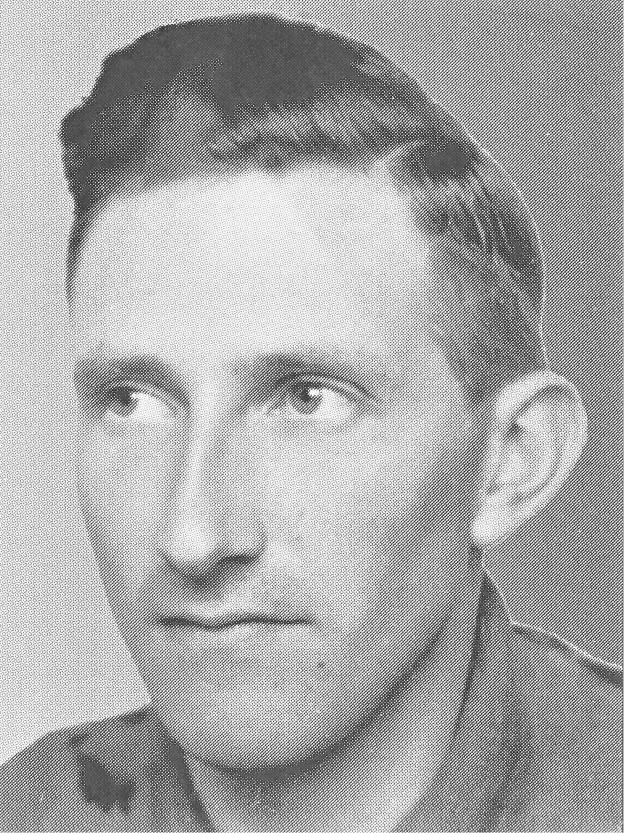
Feitze de Vries