
Old IJssel region
Assistance to forced labourers
Late one evening in December 1944, two exhausted, ragged men knock on the door of a house in the village of Megchelen. They ask for help and food and tell them that they have escaped from camp Rees. This camp was set up by the Germans for workers who had to dig anti-tank ditches along the Rhine bank, intended to slow down the advance of the Allies.
Forced labour after raids
In order to gather sufficient manpower, the Germans held raids in Dutch cities such as Haarlem, The Hague, Apeldoorn and especially Rotterdam in November and December 1944. Many men were deported to German labour camps, where they had to do hard work under appalling conditions. In camp Rees, that meant working in a roof tile factory.
Help from Megchelen
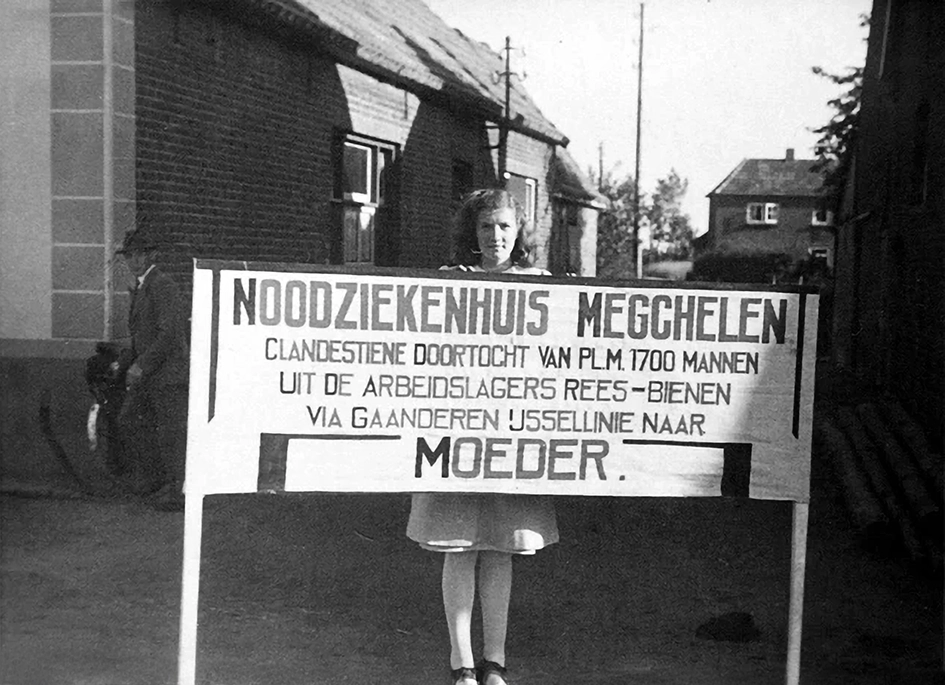
The first refugees from camp Rees make the residents of Megchelen realize how bad the conditions in the camp are. A group of young men from the village decide to take action and make contact with the forced labourers. In the middle of the night, they accompany them across the border to Megchelen. There, the exhausted workers receive food, clothing and shelter from the villagers until they can move on.
Help despite great danger
Despite the strict surveillance of the camp and the heavy penalties for helping prisoners, local residents managed to smuggle food and clothing to the camp. In Megchelen and the surrounding region, more than 1700 forced labourers who had fled were taken in and cared for during the last winter of the war.
Commemoration of the refugees
Every year, on the second Sunday in March, a memorial march is held from Rees to Megchelen. In addition, there is a fixed walking route between the two places, on which the history of these escapes is told.
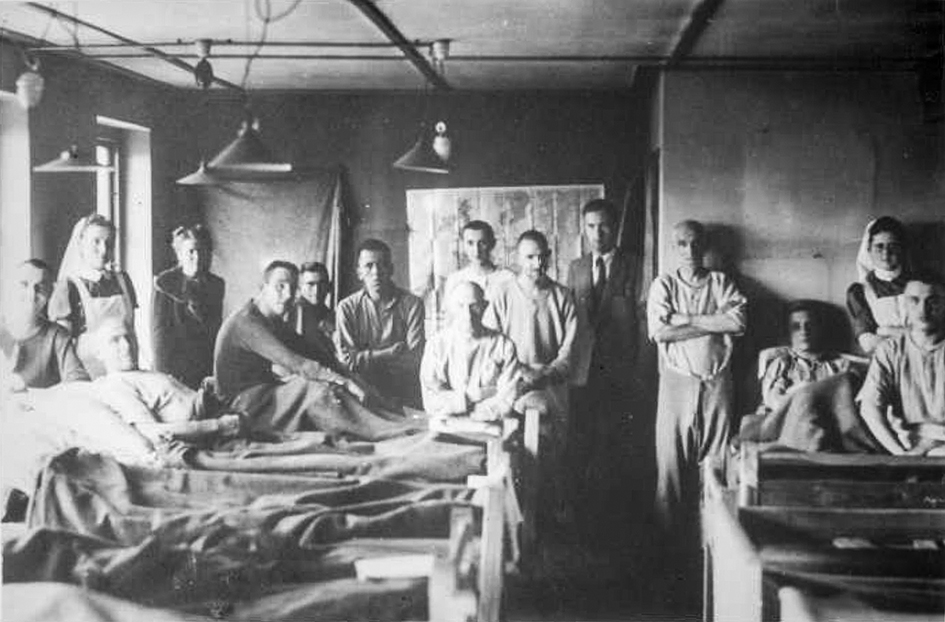
Rescued as a forced labourer from camp Rees in the Emergency Hospital in Harreveld
The Moezeköttel
On 28 March 1945, Megchelen was the first village above the major rivers to be liberated by the Allies. This not only brings joy, but is also accompanied by a lot of sadness because of the many wounded and victims. 30 Canadian and 120 German soldiers were killed, while 8 civilians were killed.
Destruction and reconstruction
When the gunpowder fumes clear over Megchelen on 1 April 1945, it turns out that half of the village is in ruins. Necessity breaks the law; People must be able to live and sleep. Residents who have lost their homes find shelter in chicken coops that have been provisionally transformed into homes, cellars, cattle or pigsties, sheds or half a house, the other half of which has been swept away.
Emergency housing and ‘De Moezeköttel’
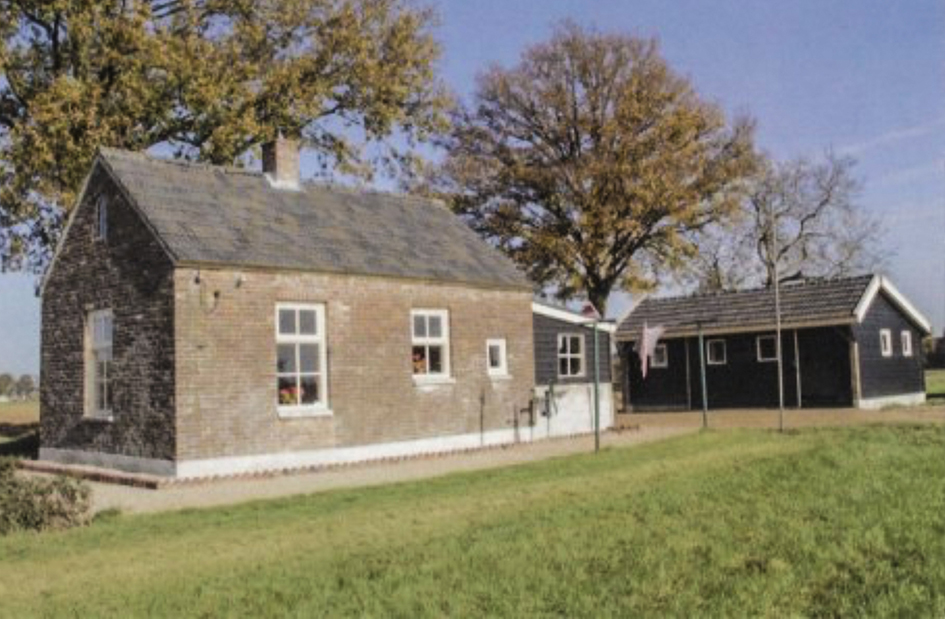
With fresh courage, numerous emergency homes are built with the rubble remains. In Megchelen alone, which has about 500 inhabitants at the time, 71 emergency housing units will be installed. Almost all those emergency homes have now disappeared, except for one tiny one: ‘De Moezeköttel’. The name refers to its small size, but the house – of course larger than a mouse droppings – is now a museum.
Historical heritage and commemoration
The Historical Society Gendringen and Stichting De Moezeköttel are responsible for telling the stories about what happened and how precious freedom is. Moreover, it is a stopping place for cross-border cycling and walking routes. In the adjacent barn, visitors can enjoy a cup of coffee or tea and watch films on a large screen.
More information: https://moezekottel.nl
Lest we forget (OWNV)
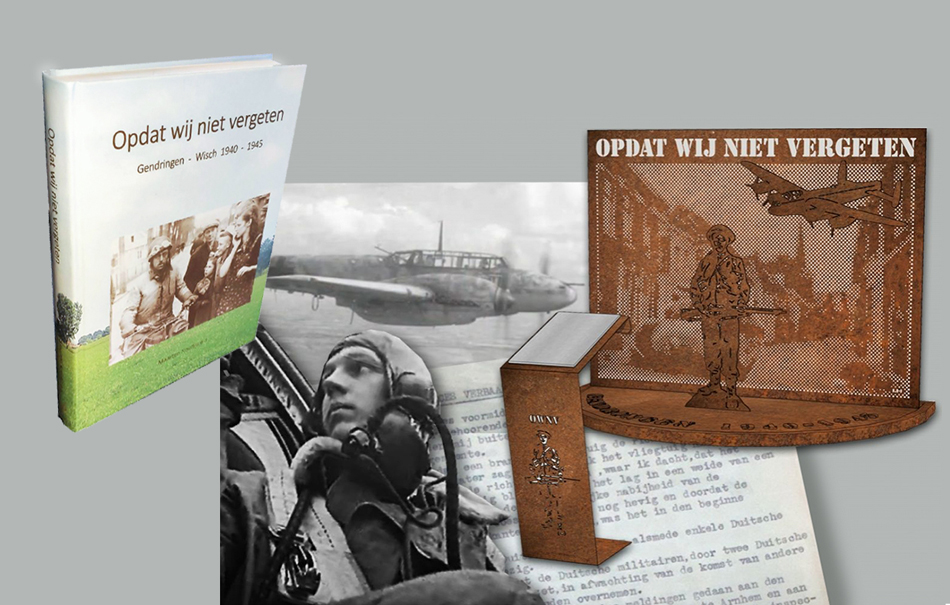
In 2022, the monument ‘Lest We Forget’ was unveiled amid great interest. This memorial commemorates more than 500 war victims – both civilians and military – from the former municipalities of Gendringen and Wisch, who died during the Second World War. The monument also honours residents who died elsewhere, such as forced labourers in labour camps and soldiers who died, for example on the Grebbeberg.
Symbolism of the monument
The background of the monument depicts the Grotestraat in Gendringen, as it looked during the liberation in March 1945. A Lancaster bomber can be seen at the top right, while a Canadian soldier is standing in the foreground.
Location with historical significance
The monument is located in the Memorial and Walking Park ‘t Olde Kerkhof, on the corner of Walseweg and Wiekenseweg. This location was carefully chosen with the municipality of Oude IJsselstreek, because the Canadian liberators entered Gendringen via the Walseweg. Lieutenant Colonel Jacques Alfred Dextraze was able to report on 30 March 1945 that Gendringen had been liberated.
Keeping
memory aliveIn addition to the monument, there is the extensive book ‘Lest We Forget’, in which the stories of the victims are told, so that history is not lost. On the website you can also find a series of videos under the title ‘War over the municipality of Oude IJsselstreek’, which discusses plane crashes in the region.
Read more: https://www.ownv.nl/over-ownv-p7212-nl.html
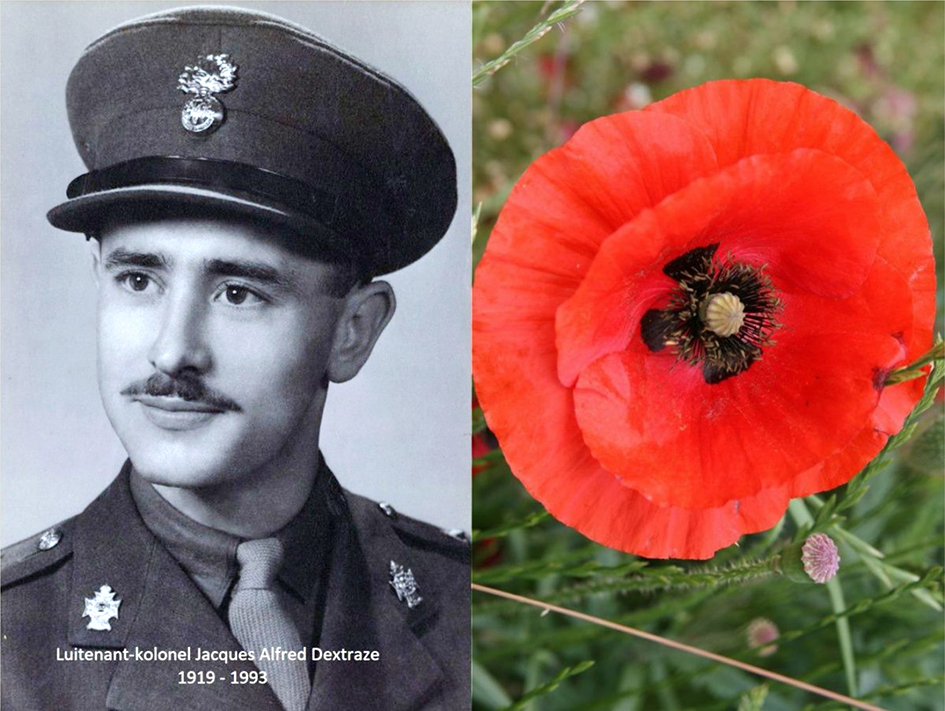
Lieutenant Colonel Jacques Alfred Dextraze
The 46 of Rademakersbroek
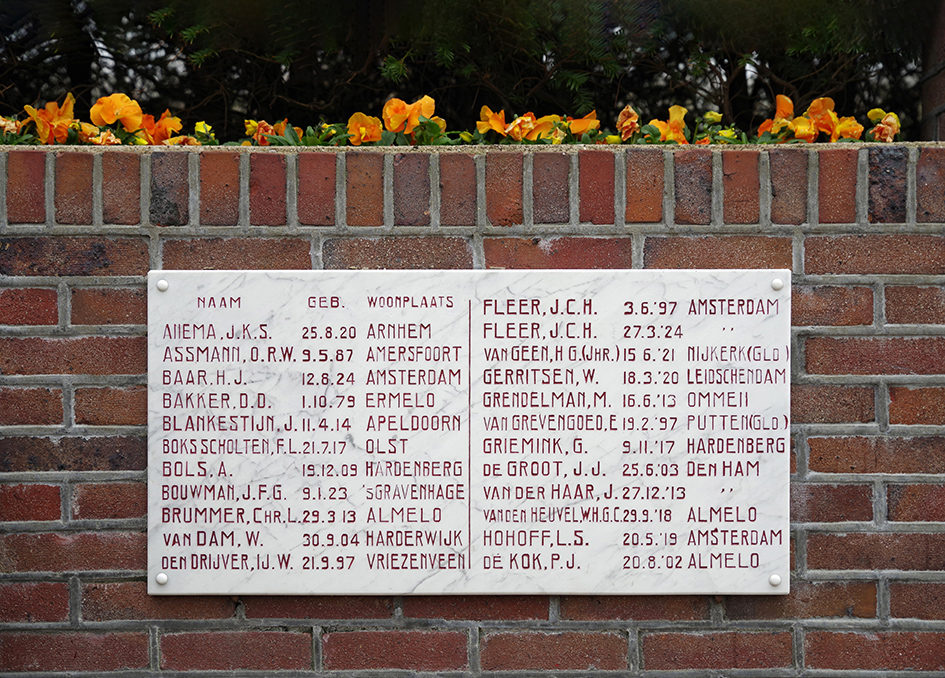
On the morning of 2 March 1945 around 8 o’clock in the morning, four weeks before the liberation, 46 men were executed in a field on the Rademakersbroek nij Varsseveld. The youngest is 18 years old, the oldest 65. The execution is an act of retaliation: nearby, the Germans found four murdered soldiers in a blown up car, the work of resistance group De Bark.
A gruesome retaliation
On the dirt road next to the farm is a closed truck, with prisoners jumping out at the back, their hands cuffed behind their backs. Around them it was teeming with German and Dutch SS men. There are military cars, motorcycles and two trucks full of German soldiers: the execution squad.
The group is driven into the still wintry wheat field behind the farm and lined up in three rows, diagonally behind each other, with their backs to the farm. A German soldier reads the death sentence, which a Dutchman then translates. Then the carbines of the execution squad sound. With the first salvo, the eastern part of the group is shot in the back and falls forward. With the second salvo the other half.
Lasting grief and memory
The execution leaves deep scars on the families: (pregnant) women, children, parents and brothers and sisters. This drama will also remain traumatic for future generations.
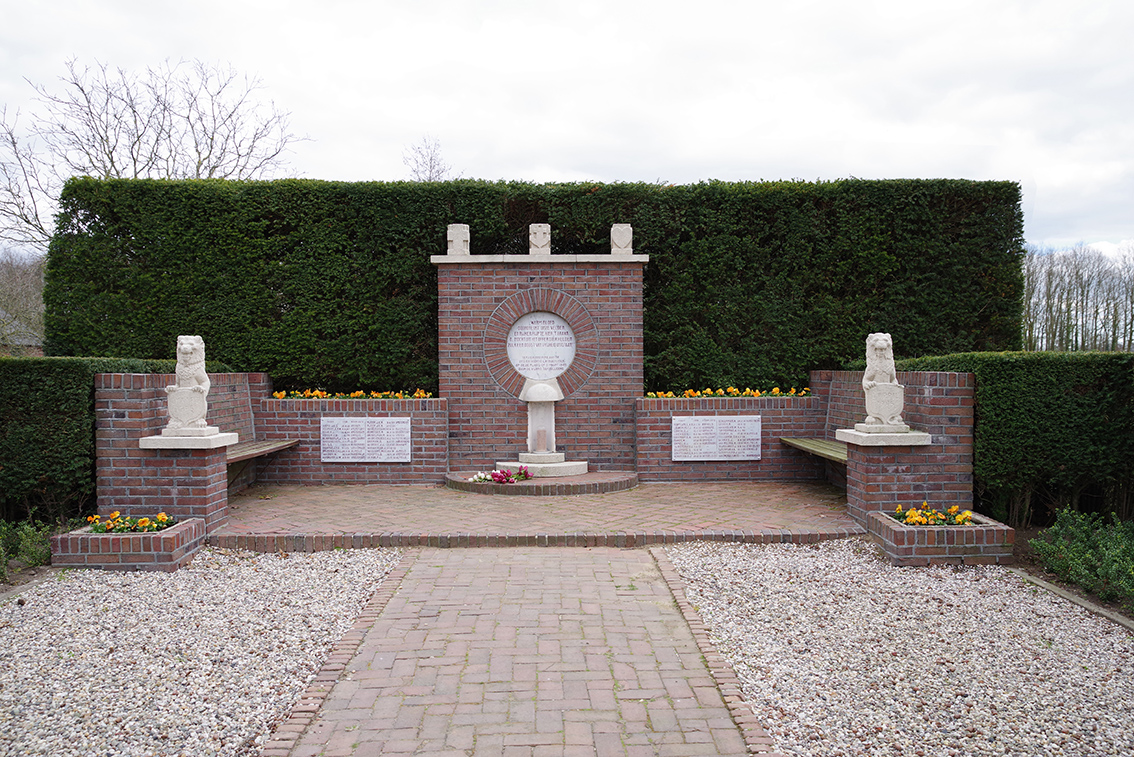
In 1949, a war memorial was erected on this site. The victims are commemorated here every year, together with their descendants and witnesses of the tragedy. The monument bears 46 names and a glass bell jar filled with grain, harvested from the field where the men were executed.
Three reliefs – a cross, an anchor and a heart – symbolize Faith, Hope and Love. The text on the memorial stone reads:
“Warm blood soaks our fields. And riper the grain ripened here. Oh, that such a harvest of freedom would arise from the sacrifice of these heroes!”
Research and documentation
The National Hiding Museum conducted extensive research into the execution. In 2022, the museum released an exhibition and collaborated on a documentary, which was broadcast by the NPO on May 4, 2023.
Read and see more:
https://de46vanhetrademakersbroek.nl
https://oorlogsgravenstichting.nl