
Aalten
Wimke Herfstink
In the early morning of 21 September 1943, a package was placed in front of the house at Patrimoniumstraat 21 in Aalten. Resistance leader ‘Uncle Jan’ Wikkerink lives at that address with his family. The package turns out to be a newborn baby. The baby is the son of Lena Jedwab-Kropveld and John Jedwab, the cantor (pastor) of the Jewish community of Aalten. The couple had been in hiding since mid-1942 and found shelter on a farm in Lintelo. The Jewish child was born there in hiding but cannot stay there because it is dangerous for all of them. That is why resistance members Jan Wikkerink and doctor Der Weduwen decided, in consultation with the parents, to leave the child with the Wikkerink family, so that it would have a safe hiding place.
A new name and identity
Three days later, the baby is registered by Mrs. Wikkerink as ‘Willem Herfstink’ and registered with that name in the birth register of the municipality of Aalten. The name was chosen symbolically. Willem, refers to Queen Wilhelmina, Herfstink to the first day of autumn (21 September) and ink means ‘son of’. The village doctor on duty – because the baby has not been circumcised – gives the statement that the child is 100% Aryan (i.e. not Jewish). Wimke remained safe with the Wikkerink family throughout the war.
The reunification after the war
After the war, Wimke was able to return to his parents. He will therefore be given his real name: Aron Jan Willem Jedwab. However, the name Willem remains and his second first name Jan refers to his rescuer Jan Wikkerink. Immediately after the war, Queen Wilhelmina came to Aalten to the house of the Wikkerink family to honour them for their deeds in the resistance. Daughter Jo: “I can still see Wilhelmina. She slaps my grandfather on the shoulder and says: ‘Wikkerink, you have a brave son’.” Jo moves in with the Jedwab family for a year so that Wimke can get used to his new family.
Read more about this story:
https://euregio-history.net/nl/node/82
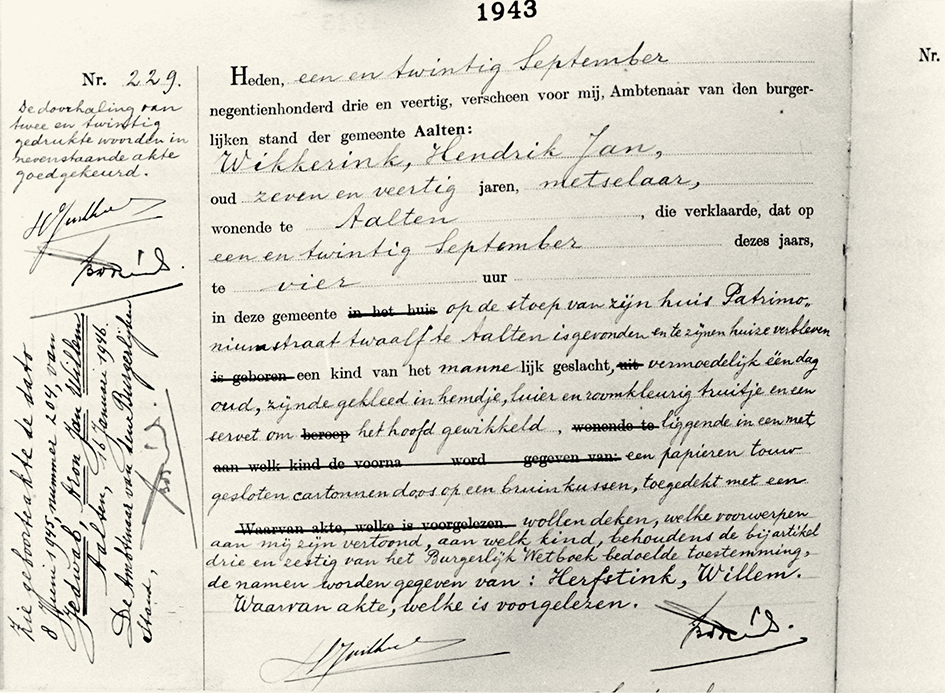
Extract from the population register with the name and subsequent adaptation
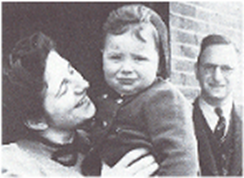
Wimke can return to his parents Jedwab after the liberation
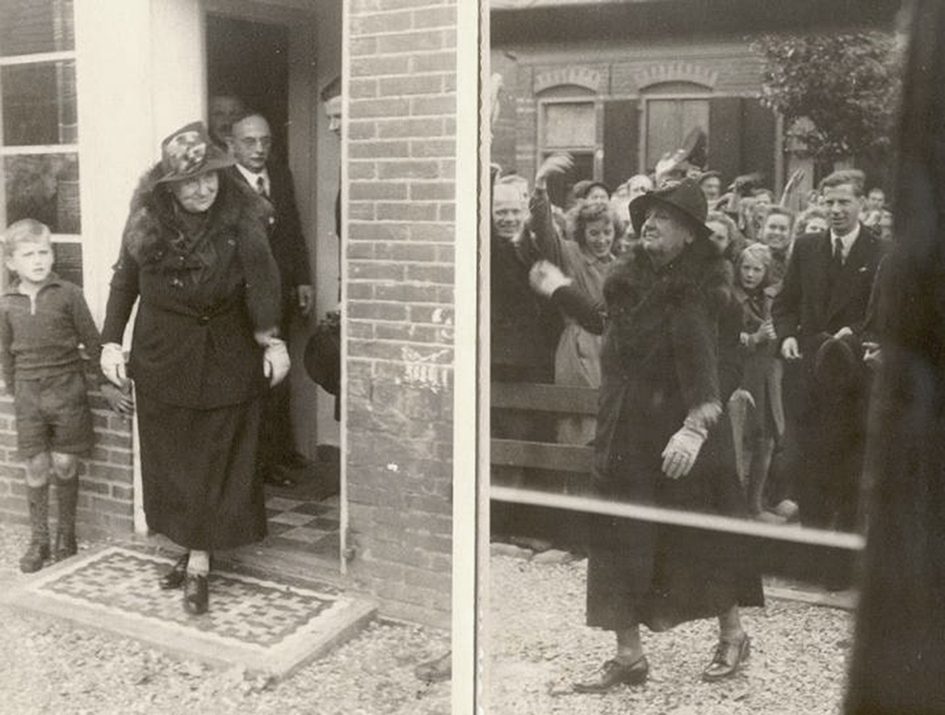
Queen Wilhelmina visits the Wikkerink family
The National Hiding Museum
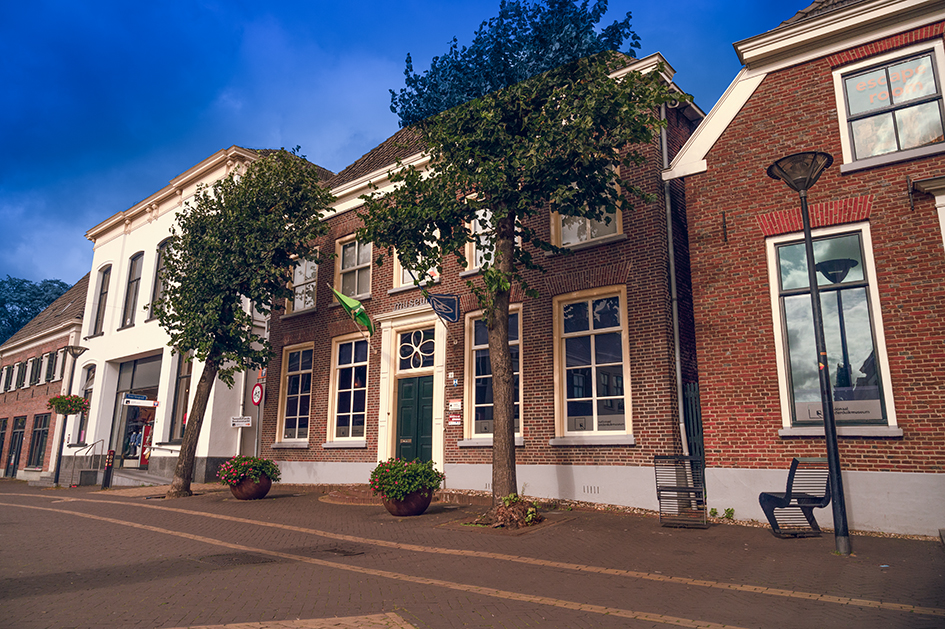
The National Hiding Museum tells the great history of resistance, hiding and freedom before, during and in the aftermath of the Second World War with small stories from the residents of Markt 12 in Aalten. The war can be experienced interactively ‘under one roof’, in a house where a family with two small children lived at the same time, the German Ortskommandant was billeted and people in hiding were hidden in the attic. During bombing raids, the neighborhood sought refuge in the old cellar. The hiding place and cellar are still accessible. The museum examines the choices and dilemmas of ordinary citizens and also gives a picture of the particularities of living and working on the Dutch-German border. Aalten had the highest number of people in hiding in the Netherlands (1 in 5 inhabitants).
Equality of religion, race and orientation has only recently been fought for in our country. Standing up for those values is our starting point and the museum’s raison d’être. Democracy is not self-evident!
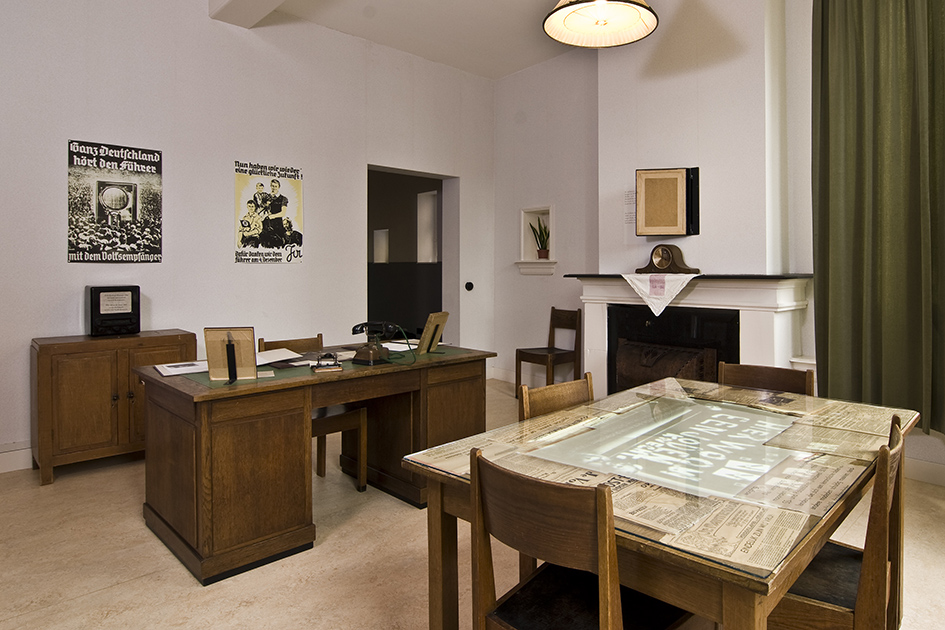
On display in the museum: The office of the German Ortskommandant in the front room
Stained glass window Oosterkerk
The stained glass memorial window in the Oosterkerk, designed by artist Marius Richter, was placed in 1946. The window was donated as a thank you for the special help that the people of Aalten offered to people in hiding. The municipalities of Utrecht, The Hague-Scheveningen, Rotterdam-Kralingen, religious denominations and the Jewish community also contributed to this donation.
A window full of symbols
The window depicts the help of the people of Aalten during the Second World War. Symbols also show the terror and persecution by the Nazis, the hunger that brought people to Aalten and the reconstruction after the war. In the middle are a farmer and farmer’s wife, surrounded by starving children and a person in hiding. On both sides, German soldiers march with bayonets. At the bottom left, starving women and children beg for help. On the right, a group returns home supplied. At the top of the window, a bricklayer and a ploughing farmer are depicted as a symbol of reconstruction. The whole is illuminated by a burning torch of the Dutch virgin with an unfurled flag.
Special details and contributions
The window also shows the help given to people and children from Kralingen in Rotterdam. On the left side the coat of arms of Scheveningen has been incorporated, as a symbol of the reception of 500 evacuees. In addition, the coats of arms of The Hague, Rotterdam, Utrecht and Amsterdam are visible, referring to important donations from these cities. The Star of David symbolizes the gratitude of the Jewish community. The text from Isaiah 16:3, ‘Hide the outcast, and do not mention the wanderer’, inspired the people of Aalten to help people in hiding.
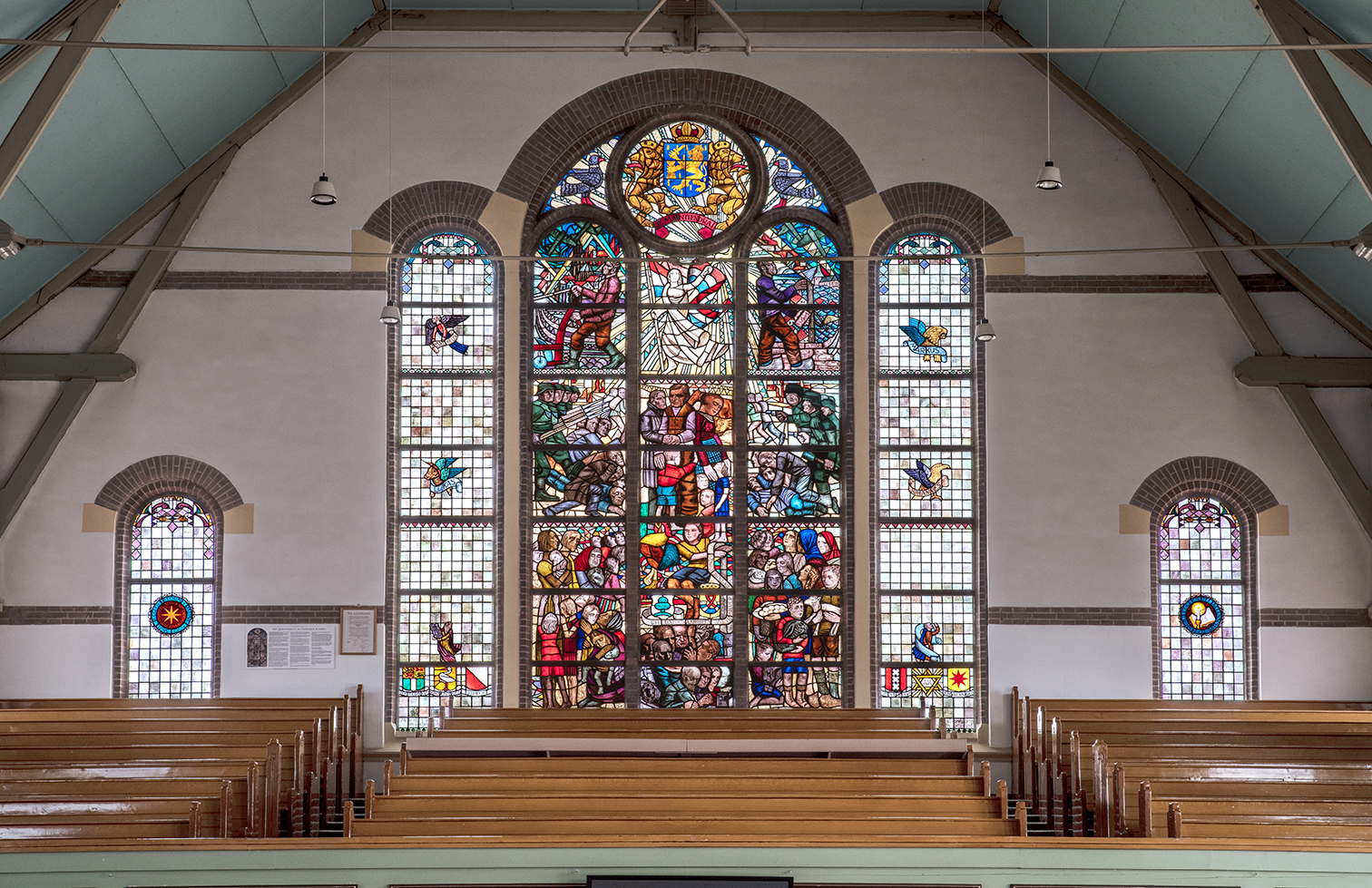
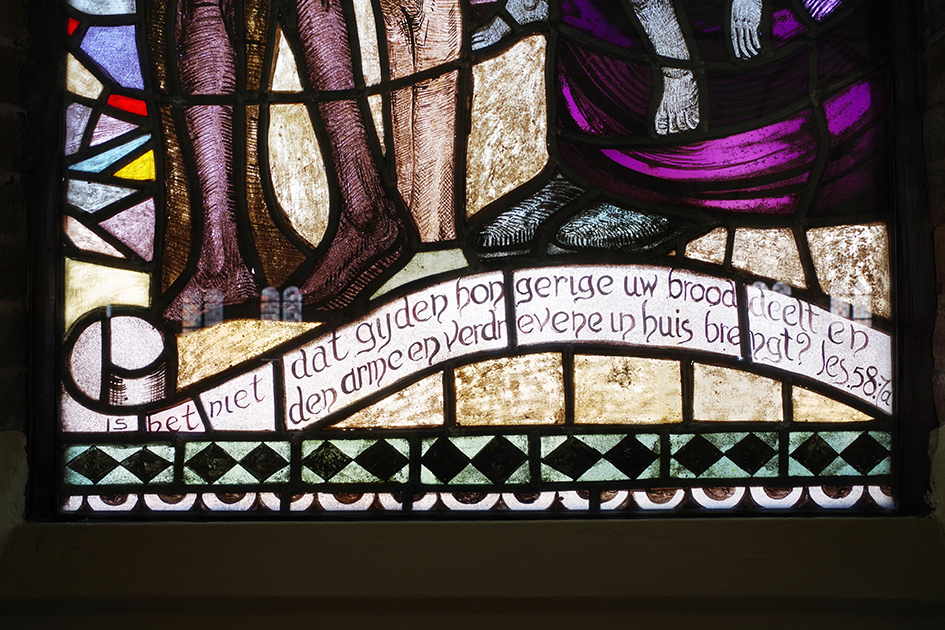
Detail of the memorial window in the Oosterkerk
The border: Heelweg/Hellweg
Heelweg / Hellweg is the connecting border road in the Dutch-German twin village of Dinxperlo/Suderwick, renamed ‘Dinxperwick’ by residents. The special thing about the street is the location of the Hellweg/Heelweg, one side including the roadway is Dutch and the other side is on German territory. Dinxperlo (approx. 8,500 inhabitants) and Suderwick (approx. 1,900 inhabitants) is the neighbourhood between a Dutch and a German village, which is virtually unparalleled in Europe.
Collaboration across borders
The municipalities of Bocholt and Aalten work well together across borders. For example, there is an international advisory committee that deals with all cross-border issues and problems. Many organizations and people are now working on a good cross-border community. Dinxperwick likes to see itself as a testing ground for Europe.
Grenslandmuseum: Stories of a shared history
The Borderland Museum in Dinxperlo tells the stories of life on the border and contributes to thinking and exchanging about the unique location on the border and the history of both villages. The museum offers the opportunity to show and experience various facets of the national border and living together on the border. For example, attention is also paid to the reception by the residents of the forced labourers who did hard work in the Kamp Rees labour camp after the raid in Rotterdam.
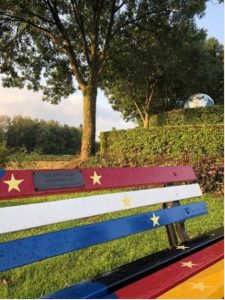
The ‘Noaberbank’
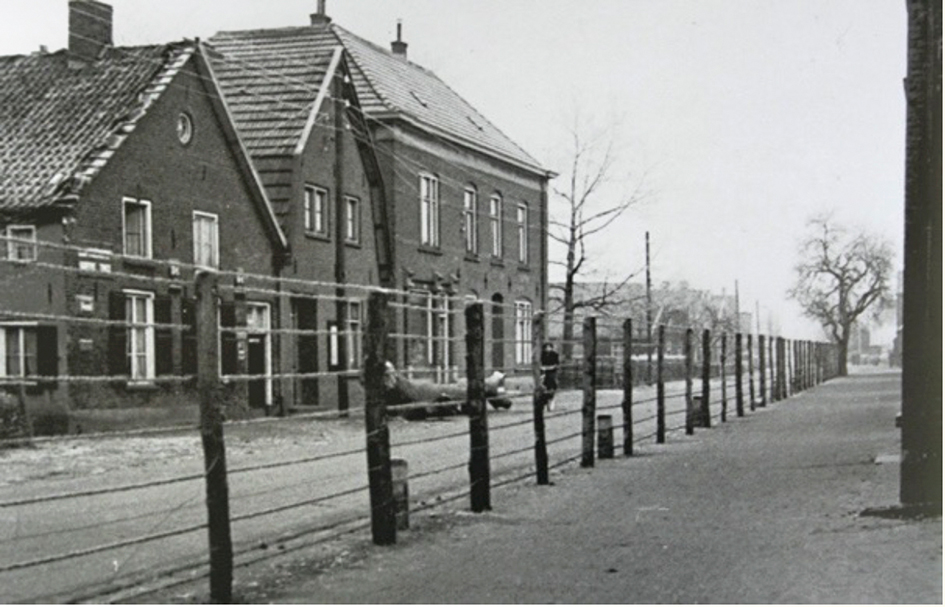
The barbed wire fence on the border