
Westervoort
The advance of the Germans
At the beginning of the Second World War, the Liemers played a crucial role in the German plan of attack. The Germans wanted to surprise the Dutch defences at the three bridges over the IJssel near Westervoort with a raid team and an armoured train. If they take the bridges unscathed, they can quickly push through to the Grebbe Line.
The Battle of the Bridges
On 10 May 1940, the first day of the war, Westervoort was badly hit. The bridges are of strategic importance. The Dutch army is stationed at the fort on the IJsseldijk, but has few options to stop the German advance. To prevent the enemy from using the bridges, the Dutch army blew them up.
Crossing
the border in disguiseIn order to take the bridges before the attack time, the Germans sent a camouflaged bicycle column. Disguised as Dutch soldiers, with Dutch-speaking commanders and false uniforms, they crossed the border. This tactic is used at several bridges along the eastern border.
In the early morning of 10 May 1940, the members of the raiding team received bicycles, weapons and ammunition from the SS-Standarte “Der Führer” in Elten, at the foot of the Elterberg. They marched in column via Beek to the border at Babberich, where they were met by two ‘Dutch’ soldiers – in reality Germans in disguise. After a short consultation with their commander, they cross the border and set course for Didam.
Alert watch commander
Around 1.45 am (Dutch time), more than two hours before X-Zeit, the German bicycle column reaches the center of Didam. On the Wilhelminastraat, near the Church of Our Lady, they found an asparagus barricade guarded by Sergeant Klaas Kaspers and his men.
The German leader, who pretends to be Sergeant Verkerk, speaks fluent Dutch. He does not know the password, but requests to be passed because he is said to have been ordered to travel with this bicycle patrol via Beek, Didam, Zevenaar, Duiven, Westervoort to Arnhem. He shows a handwritten note from Captain Dijkstra, staff TBO.
But Sergeant Kaspers does not trust it. He notices that the stripes on Verkerk’s uniform are different and that his men are carrying machine guns that he does not recognize. He has a light machine gun M20 brought into position and confronts Verkerk with his findings.
Disarmament
Kaspers makes a decision: the group must be disarmed. As he takes a closer look at the machine guns, he sees small holes in the barrel – a detail that confirms his suspicion. One by one, the men, without protest, lay down their weapons.
When the planned raid on the bridges at Westervoort failed and the bridges were blown up, the SS had to make the crossing of the IJssel with rubber boats.
The deployment of German troops who dress and pretend to be Dutch soldiers is a war crime. The choice for the use of Dutch uniforms was made in the highest army circles. These raid groups are under the command of the Abwehr; the German intelligence service. The highest boss of the Abwehr; Canaris, objected, but Hitler himself pressed on.
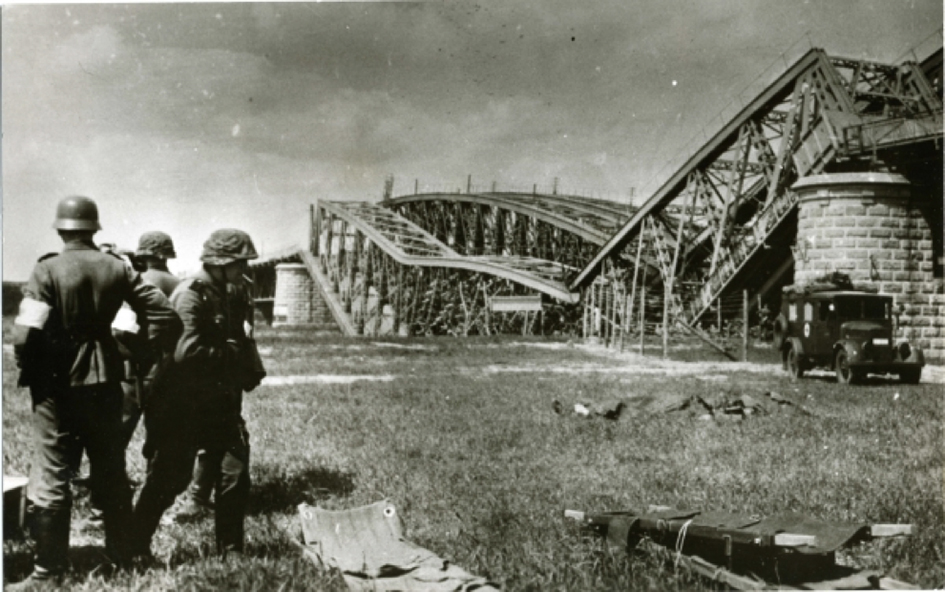
The bridge at Westervoort. The photo was taken from the south side in 1940. On the left three German soldiers of the SS Regiment “Der Führer”
Market Garden
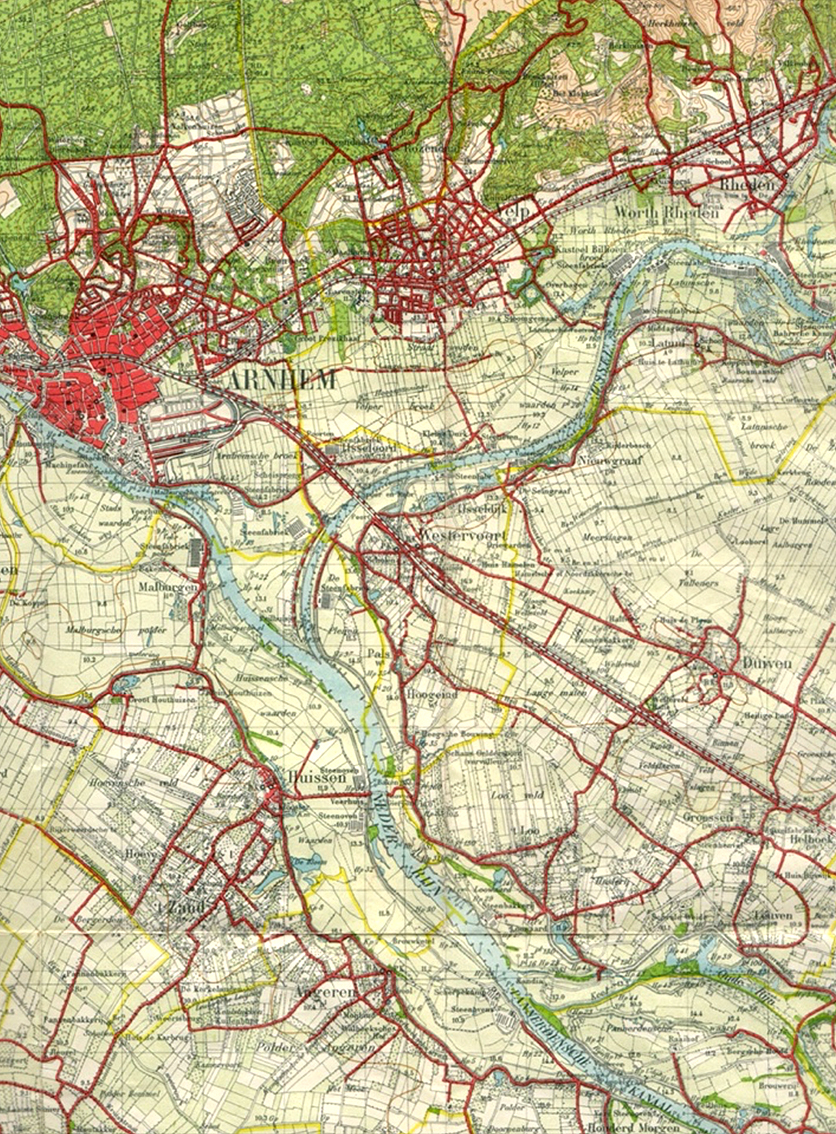
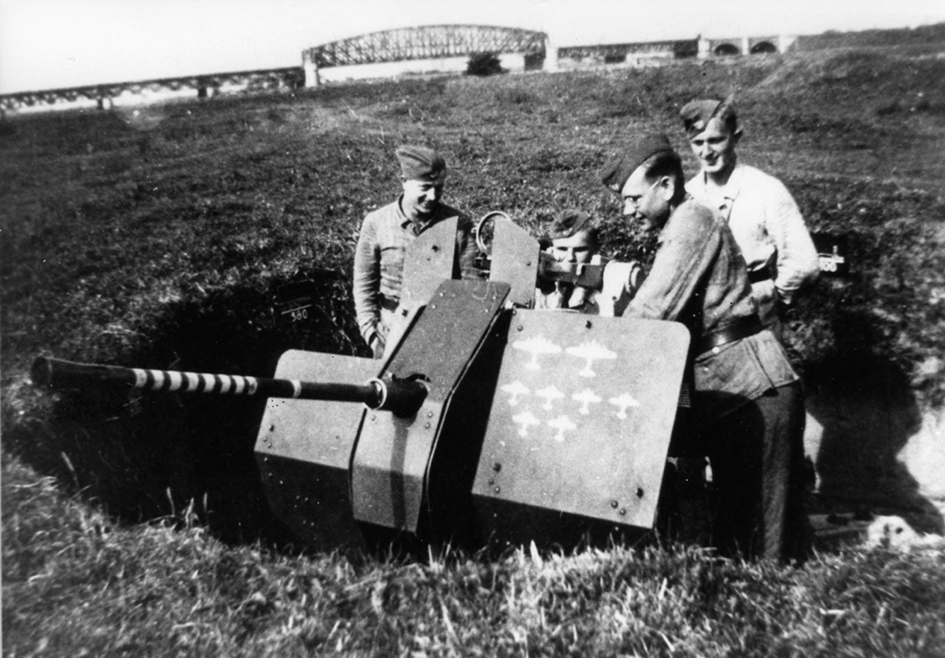
Westervoort was put on the front line by Operation Market Garden. The battle for the Arnhem bridge is raging in all its intensity. In Westervoort there were a lot of anti-aircraft guns from the German army and they were bombarded by the Allies from the air. The population lives in suspense.
Evacuation Westervoort
In November 1944, the situation in Westervoort became so dangerous that the German occupying forces decided to have the inhabitants evacuated.
On 16 November 1944, many Westervoorters gathered at the viaduct on the Dorpstraat, with only their most important possessions. Only farmers are allowed to stay, because they have to take care of the livestock. It was only after the liberation in May 1945 that the inhabitants were able to return to their village.
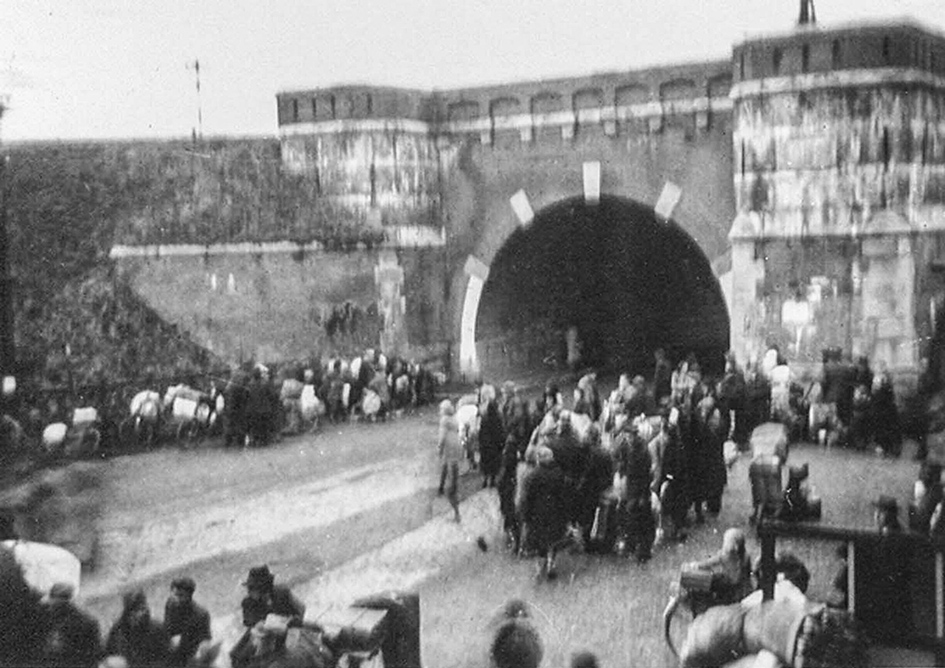
Westervoort residents gather for the evacuation in 1944
Quick Anger
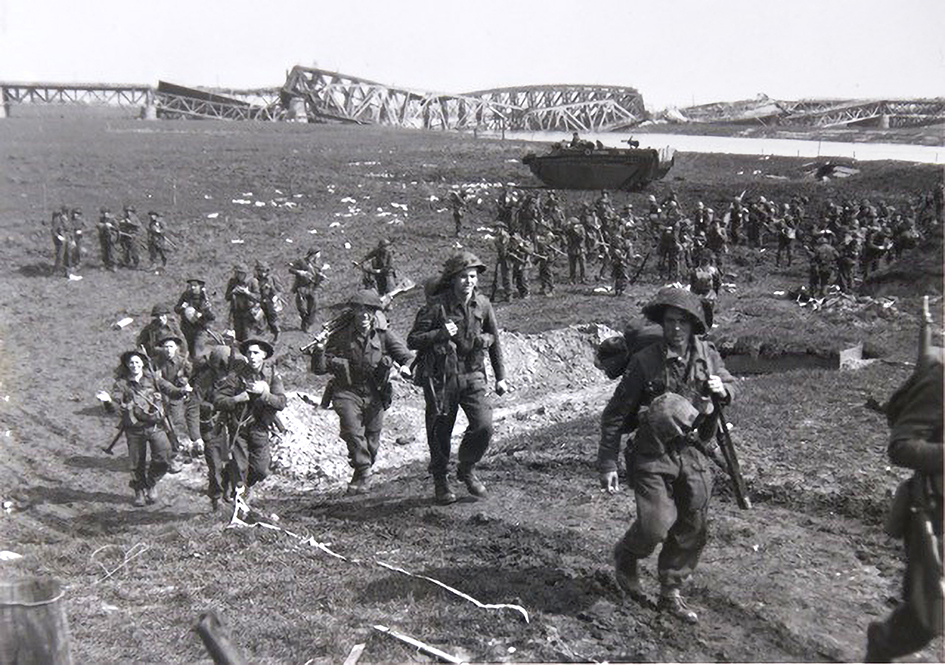
Westervoort is also the center of the second battle of Arnhem. From this village, 20,000 English and Canadian soldiers, the Polarbears, crossed the IJssel. This second battle of Arnhem was a success and on 12 April, Arnhem was liberated step by step from the east side. ‘Quick Anger’, as this battle is called, is going very well. But Westervoort suffers enormously. For the second time, the bridges were blown up, but this time by German soldiers.