
Forgotten Ausweis ends in fatal torture –
Johannes (Johan) Winkelhorst
Johannes (Johan) Winkelhorst
12 April 1903 – 30 April 1945 (aged 42)
Killed in Ravensbrück Germany
Berkenhove Cemetery, grave no. 858 (commemorative plaque)
Johan Winkelhorst was born on 12 April 1903 in the hamlet of Lintelo in Aalten. In 1928 he married Johanna Theodora in Grotenhuis. Together with their 7 children (born in the period 1928-1936) they live on the Hogestraat in Aalten. Johan is a pig trader by profession. On Thursday 17 August 1944 in the morning, he greeted his wife and left for Groenlo to buy brushes and brooms. There he is stopped on the market by two Dutch SS men in uniform, working for the Winterswijk Employment Office. They ask about his Ausweis. He doesn’t have it with him, so they take him to Winterswijk.
His wife receives a telegram only two days later that her husband has been locked up in the police station in Winterswijk and that she can visit him there. Johan tells her that he will be transferred to the Sicherheitsdienst in Arnhem that afternoon. From there he ended up in camp Amersfoort. Shortly afterwards, he was transferred to the notorious Erika prison camp in Ommen. To then, a few weeks later, return to camp Amersfoort.
After Mad Tuesday, 5 September 1944, he and 1400 other prisoners were transported from camp Amersfoort to Neuengamme. Only 70 of them will eventually survive the war. From Neuengamme it goes to camp Husum.
Every day, the prisoners were taken to the coast to dig out anti-tank ditches 6 metres wide and 2 metres deep under harsh conditions. They often stand barefoot in sandals in the cold water. Wearing only thin prison clothing, they have to do the hard work. Many die from exhaustion and diseases. Others, if they do not work hard enough in the eyes of the Kapos (Kamp Polizei), are clubbed to death. At the end of December, the prisoners return to Neuengamme.
When the Allies advanced further into Germany in the spring, the prisoners were dragged from one camp to another under inhumane conditions. At the beginning of April, the prisoners from Wattenscheid, without water and bread, are crammed into cattle wagons and the train criss-crosses Germany. Many succumb to hunger and thirst. The train is also shot at again by Russian fighters. After eight days, the train finally arrives in the well-known women’s camp Ravensbrück, near Berlin.
The camp is packed with prisoners and when the camp is finally liberated by the Russians, many die in sight of liberation. So did Johan Winkelhorst. The date of death is given as April 30.
June 28, 1945 the pastor of the N.H. church, Rev. van Petegem, comes to Mrs. Winkelhorst to tell that her husband died in the Ravensbrück concentration camp.
Fourteen days later, Jan Tolkamp, who survived Ravensbrück, confirmed that Johan Winkelhorst had died there on 30 April 1945.
Mrs. Winkelhorst never received an official message that her husband had died…
For example, a forgotten Ausweis in Groenlo, after a true torture, ends in an unimaginably cruel end in Ravensbrück.
Sources:
Dossier Politieke recherche Doetinchem no. 3244 d.d. 12.9.1946
Memoirs Jan Tolkamp: How to survive five concentration camps.
Daughters Liza and Gerda Winkelhorst, and daughter-in-law Gerda Winkelhorst-Janssen.
Research: Ina Brethouwer
©Archive: National Hiding Museum
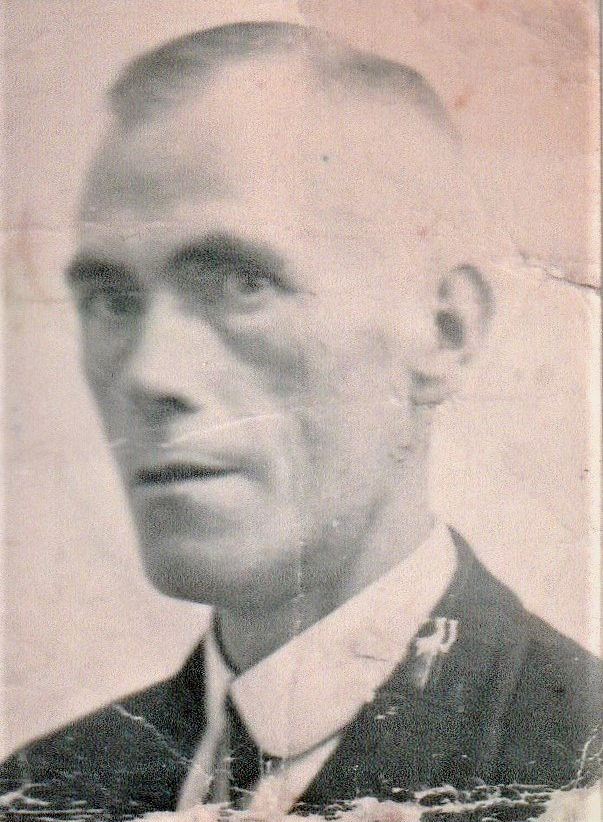
Johan Winkelhorst
12 April 1903 – 30 April 1945 (aged 42)
Died in Ravensbrück Germany
Berkenhove Cemetery, grave no. 858 (commemorative plaque)
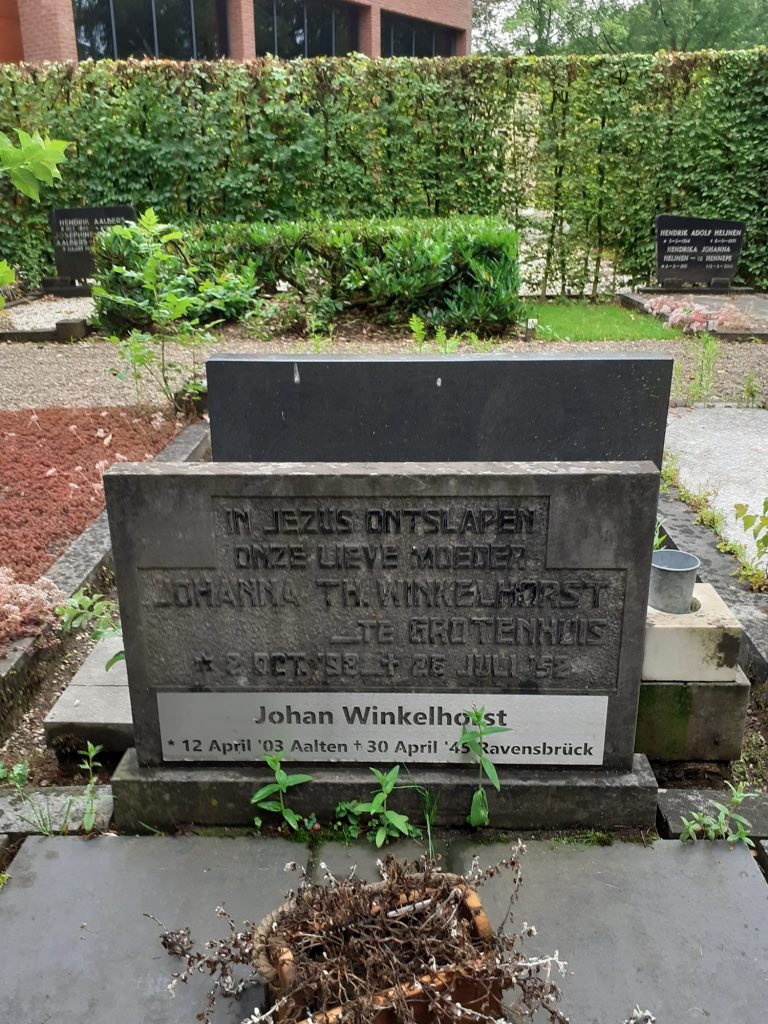
Grave of Johan Winkelhorst with commemorative plaque
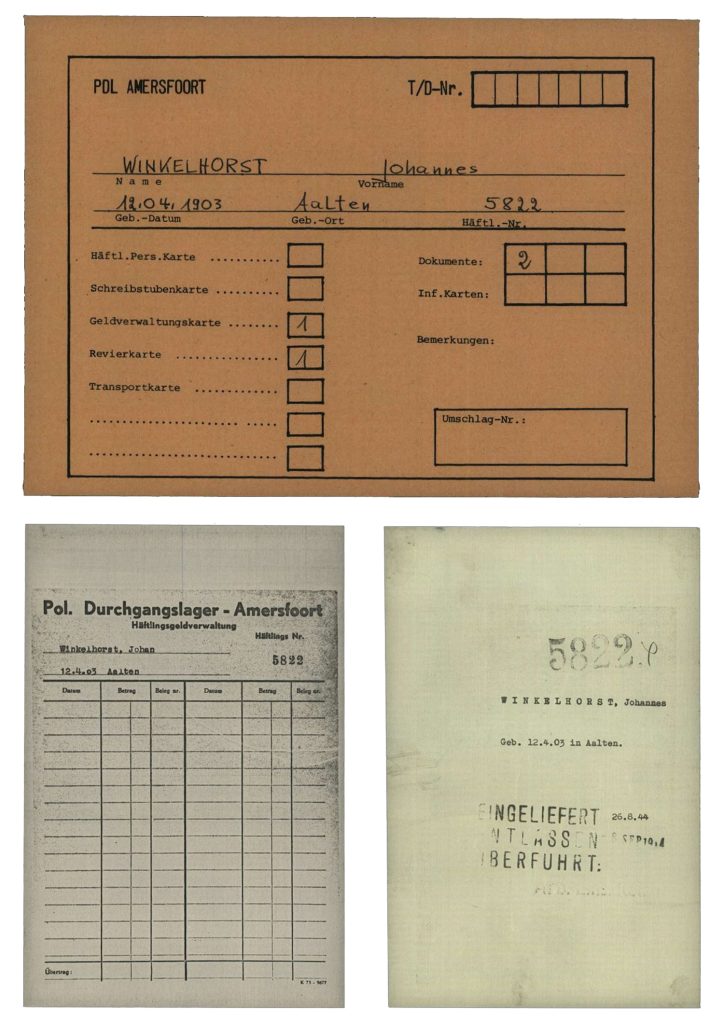
Documents of Johan Winkelhorst from Kamp Amersfoort