With the exhibition ‘1572 and the power of Gertrud’, the National Hiding Museum is in line with the national theme 1572 in which we reflect on the ‘birth of the Netherlands’ in 2022. It is the year of a war in which citizens, cities and provinces not only faced each other with their Spanish monarch but also with each other. Ultimately, this armed struggle led to the creation of the Republic, the predecessor of today’s Netherlands.
In the context of 1572, the National Hiding Museum wants to have a conversation about the four Rs and the tension between freedom, tolerance, diversity and solidarity. The museum does this by highlighting the history of Gertrud von Millendonk, among other things.
The regional story is placed in the context of time and in collaboration with regional architects of the Achterhoek, supplemented with archaeological finds from the museum’s own collection. The national exhibition 1572 can also be seen in the museum.
Gertrud von Millendonk
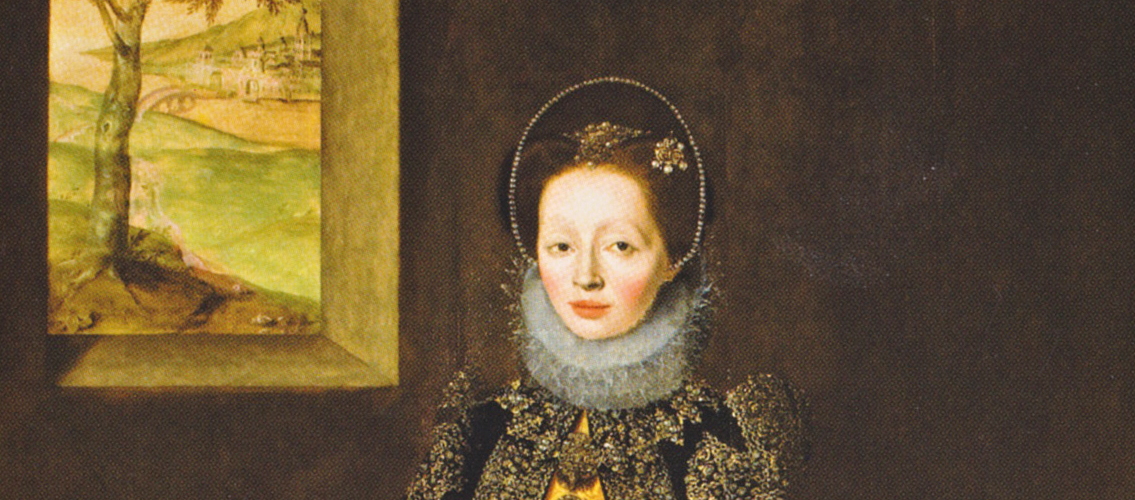
Gertrud von Millendonk is the wife of Jacob van Bronckhorst-Batenburg and Lady of Anholt. After his death in the battle against the Geuzen, she was put in charge of the Lordship of Bredevoort from 1582 to 1612. Gertrud tries to find a balance between the warring groups and remains in this position as a polder woman ‘avant la lettre’. She is in fact pro-Spanish and a convinced Roman Catholic, but outwardly she does not take sides. She makes every effort to establish a neutral position with friend and foe, while the harsh reality and the violence of arms always force her to make a choice. Finally, in 1612, she gave up her position and handed over the Lordship to ‘orange’ Prince Maurice.
Collaboration for double portrait
The National Hiding Museum works together with the Bergh City Museum in ‘s Heerenberg, which also focuses on a woman: Maria van Nassau, the sister of William of Orange, wife of Count William IV van den Bergh. Although she was raised Protestant, she is tolerant of other religions, just like Gertrud. On the other hand, she goes on a campaign with her husband and witnesses the very cruel actions of his army. This consists of mercenaries who plunder during the conquests of cities and villages in the east of the country, such as Doetinchem, Doesburg and Zutphen. Alva praises her courage and her attitude during the battles. At the birth of the Netherlands, Maria fulfilled a special role alongside her husband, whom she always remained faithful.
For example, the two museums are presenting a double portrait of two powerful women as part of the national project 1572.
Bringing archaeology closer
Both museums are also working together with the regional archaeologists of the Achterhoek Achterhoek Archaeology Project Environment Agency. On the occasion of 1572, they will assist the museum in updating the archaeological presentation, highlighting the period 1572 and the 80 Years’ War with pieces from its own collection. The archaeologists will ensure that this exhibition is expanded with archaeological information about the Eighty Years’ War. To this end, they use various means, including a 3D scan of objects and images associated with the Eighty Years’ War with the underlying story. Think, for example, of weapons, cannonballs or a coin hoard. These topics can also be seen via a project website that will remain in use for a longer period of time. The presentation will also be on display in the museum for a longer period of time.
Background information 1572
1572 Freedom, tolerance, diversity and solidarity
The commemoration of the 450th anniversary of the birth of the Netherlands is mainly focused on contemporary values that already played a crucial role in the Eighty Years’ War: freedom, tolerance, diversity and solidarity. Now the Netherlands is a free and independent country. This has not been self-evident and has not always been the case. The Dutch have had to fight for their independence several times. This applies to the Second World War, but also 450 years ago during the Eighty Years’ War (1568-1648). William of Orange played an important role in the creation of Dutch citizenship. He wants to get out from under the yoke of Spanish rule and work towards a community of interests. He knows how to get the population on board to fight for more independence. From that moment on, the Netherlands and the House of Orange are connected.
Values
The Dutch attach great importance to a free, tolerant, diverse and connected country. In practice, however, these values are often at odds with each other. For example, what does it mean to be free? Can you do something or do you have to leave something behind? The freedom of one sometimes limits the freedom of the other. The same applies to dealing with people who think differently. Should you be tolerant and let the other person have his way, or should you strive for integration in a mixed society? And should you strive for diversity or not? These questions are still relevant today.
Dilemmas of all times
Dilemmas about freedom, tolerance, diversity and solidarity are therefore not new. They were already the subject of discussion before 1572. Nobody felt Dutch (that concept in this sense did not even exist at the time). The year 1572 is a starting point in the story of the values that still both unite and divide us. Although the circumstances differ, the same dilemmas continue to play a role. Then, during the Second World War, but also today.
Tentoonstellingen
lees hier meer over ons aanbod tentoonstellingen.
ervaringen
nieuwsbrief
Blijf op de hoogte, schrijf je in voor onze nieuwsbrief. En hier een zin over wat je dan allemaal toegestuurd krijgt. Heel interessant.