
Dutch National Battalion
A citizen army marches with the Canadians
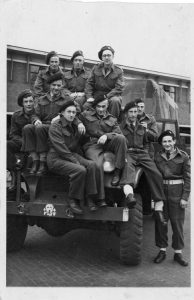
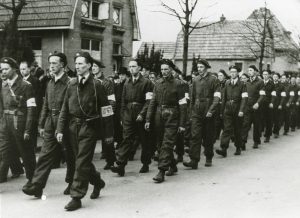
The Dutch National Battalion (DNB) consisted of more than 400 people in hiding and resistance fighters from all over the Netherlands: pilot helpers, women, Jews, students, soldiers, Reich German deserters and Arbeitseinsatz refusers and many farmers’ sons. They considered it their duty of honor to join the Canadian Liberation Army and to actively fight on the front line. The battalion with three companies officially became part of the Canadian army and helped with the clearing of areas along the IJssel, Deventer, Apeldoorn, via Tiel and the Veluwe to Amersfoort and after the war with the clearing of mines, among other things.
Active role of citizens in the liberation
In 2025, it will be 80 years since the Netherlands was liberated with the help of allied countries. It is less well known that many civilians played an active role in this through the Dutch National Battalion (DNB). The National Hiding Museum believes it is important to pay attention to this special battalion that was important for our freedom.
Dutch National Battalion is the name of the army that marched with three companies of more than 400 people in total with the Canadian army to liberate the rest of the Netherlands (from mid-April to mid-July 1945). The battalion consisted of professional soldiers, resistance fighters and people in hiding, including women, students and Jewish men. They came from all parts of the country, of course also farmers’ sons and villagers from the east of the Netherlands and the Achterhoek. This was not very obvious because some of them were married and had children. Many men had a close camaraderie due to years of resistance against the occupier.
The battalion moved along at the front and provided flank cover, helped to clear areas along the IJssel, Apeldoorn, the Veluwe and up to Amersfoort. They came under fire and arrested hundreds of Germans. They guarded the so-called checkline between the west and east of the Netherlands, guarded a prisoner of war camp and were ordered to burn material captured from the German army from all over the Netherlands in Tiel for weeks.
Return or in service with the Dutch army
On 12 July 1945, the DNB was disbanded. While some members of the battalion chose to return home, others re-enlisted as soldiers in the Dutch Army and underwent training in mine clearance. Consequently, many men continued to deal with the aftermath of the war for months. This work, too, was not without danger.
If you know more about your family circle: let us know
Many responded to our calls via media to share information with us. Thank you very much for that. Photos of troops, memories and documents are still very welcome.
Please contact the secretariat of the museum:
telephone 0543 471797 or via the email address info@onderduikmuseum.nl
Tentoonstellingen
lees hier meer over ons aanbod tentoonstellingen.
ervaringen
nieuwsbrief
Blijf op de hoogte, schrijf je in voor onze nieuwsbrief. En hier een zin over wat je dan allemaal toegestuurd krijgt. Heel interessant.