
Duiven
The burning oil train
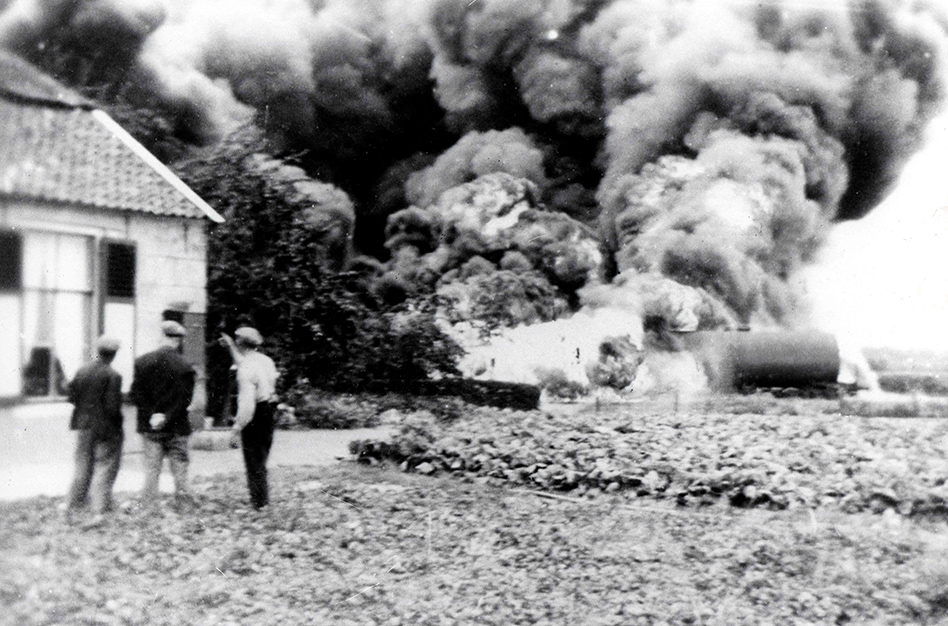
Due to the rapid advance of the Allies to Nijmegen, the Germans in Arnhem became very anxious; It is likely that this city would be the next target of attack. Before that happens, it is decided to pump the last remnants of fuel from the tanks on the Shell site on the Westervoortsedijk into a waiting train. It is not known whether this robbery was betrayed, but the fact is that on 5 September 1944 this oil train between Westervoort and Duiven was suddenly attacked by English fighter planes and set on fire and drove on to the station of Duiven.
Around noon, eyewitnesses saw a long train coming from Arnhem. When the train was about at the level of the crossing at the Horsterstraat in Duiven, suddenly English fighter planes arrived, which dived lower and lower, there was heavy shooting. Suddenly there was a violent explosion and the sky turned black like a solar eclipse. The train came to a stop at Duiven station. Huge clouds of smoke rose and the station also burned down.
Tank barrier from 1939
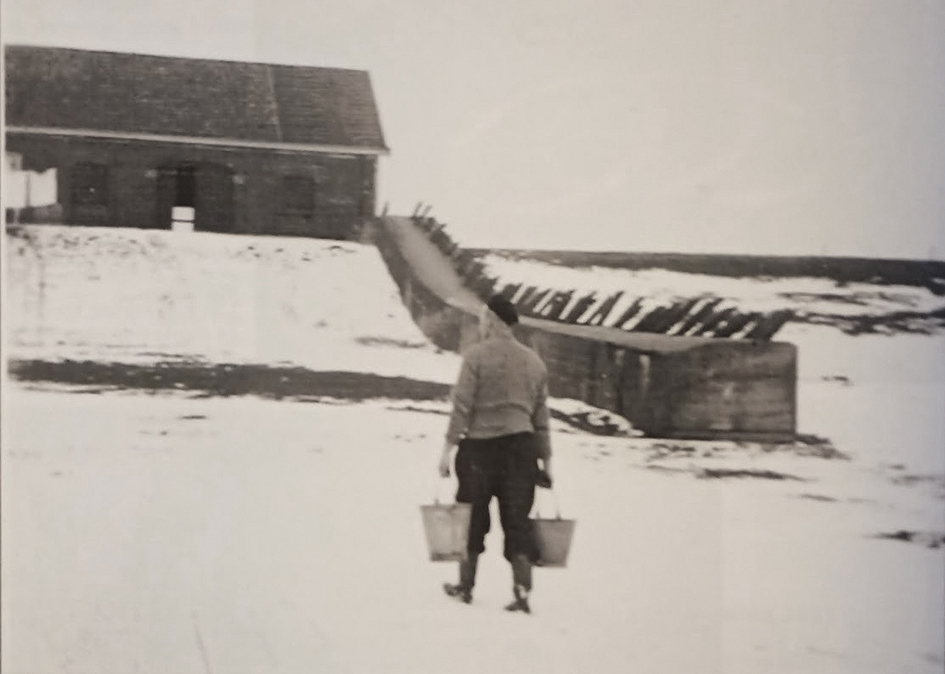
The tank barrier was built in 1939 at the time of the mobilization of the Netherlands for the impending war. The tank barrier consists of an elongated concrete element in which steel railway rails have been installed with a pointed end. On one of the rails the text ‘Union 1881’ can be read. This refers to the Dortmund-based steel manufacturer Union that was founded in 1872 and acquired in 1910. The factory made railway tracks, among other things.
Only the part of the tank barrier against the embankment has remained and is about 30 meters long. As a tangible and striking remnant of a defensive structure, the tank barrier is an important part of the historically grown landscape of the municipality of Duiven and in particular Groessen, close to the German border.
Tragedy in Groessen
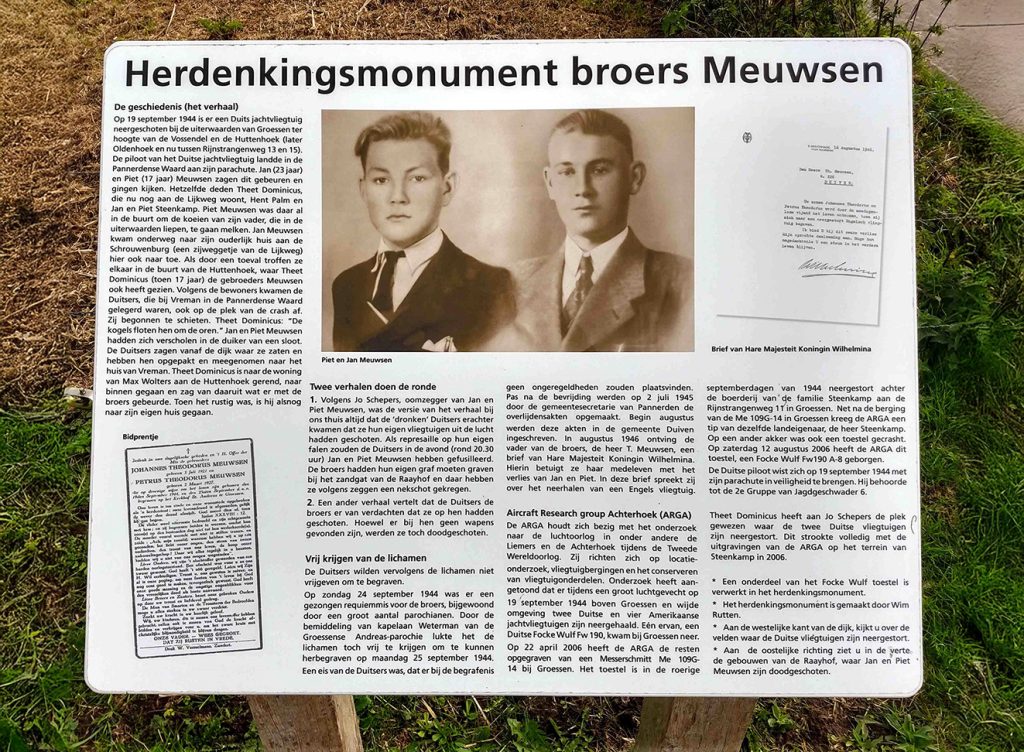
It is September 19, 1944, day three of Operation Market Garden. At Groesbeek, Nijmegen, Arnhem and Oosterbeek, American and British soldiers fought heavy battles with the Germans. It is a sad day in Groessen. The brothers Jan and Piet Meuwsen were shot by the Germans. The circumstances are still unclear to this day.
It is restless in the air above the Liemers on Tuesday 19 September. American and German fighter planes fire at each other, as many as six aircraft are shot down. A German pilot manages to get to safety with his parachute and lands in the Pannerdense Waard near Groessen, two German planes crash into the floodplains. Several boys from the neighborhood are curious and go to have a look. 17-year-old Piet Meuwsen is already in the area, he is milking the cows that walk in the floodplains. His brother Jan, 23 years old, is on his way to his parental home when he passes that place. The two brothers were arrested by German soldiers and shot. Through the mediation of the Groessen chaplain Westerman, the Germans gave permission to rebury the remains on the condition that no disruption would take place during the funeral. A few days later, the brothers were reburied at the Roman Catholic cemetery in Groessen.
To keep this sad but also special story alive, the Municipal Executive of Duiven erected a memorial monument on the Leuvensedijk in Groessen in 2017.
The evacuation of the population
On November 15, the dreaded message arrives that the villages must be evacuated. Part of the population does not like this and decides to seek shelter on their own or stays behind. The evacuation committee decides that the evacuation of Duiven and part of Groessen must take place on Saturday morning, 18 November. That Saturday morning, in the pouring rain, it turns out that there is not enough transport available. Although horse and cart have been requisitioned from the farmers, they do not appear. The mayor of Zevenaar is asked for help and the next day the retreat goes well.
The first goal is Wehl and then Doetinchem. Here they spend the night and it turns out that the evacuation address will be in Varsseveld. The next day, the evacuees were transported to Varsseveld by tram.
Zieuwent and Mariënvelde were important places for people in hiding and evacuees during the war. Especially after the battle of Arnhem, the villages filled up. The number of residents grew by more than 50%. Many evacuees have also been housed in the Achterhoek because of the Atlantic Wall.
Atlantic wall: Scheveningen and the coastal area of The Hague became ‘Sperrgebiet’ during the Second World War. By order of the German occupier, people had to leave this coastal town en masse. Thousands of evacuees were ‘moved’ elsewhere in the country, especially in Overijssel and Gelderland. This is how they ended up with host families in Aalten (500), Winterswijk (600) and Lichtenvoorde (500). After the war, evacuees returned but also stayed, in love, engaged and married, they started families.
Overview of the evacuation of the Liemers 1944 – 1945
- Pannerden: 24 September 1944 and 15 January 1945.
- Loo: 27 and 28 September 1944 in the direction of Groessen, 13 and 14 October Loodijk, 15 January 1945 departure of most of the stragglers.
- Westervoort: 28 September 1944 partially, 16 – 17 November partially, including to Hengelo (Gld) and Keijenborg, 15 January 1945 departure of most of the stragglers.
- Duiven: 15 – 17 November 1944.
- Groessen: 18 and 19 November 1944 in the direction of Steenwijk and Varsseveld, 15 January 1945 departure of most of the stragglers.
- Oud-Zevenaar: 10 – 12 February 1945.
- Babberich: 10 – 12 February 1945.
- Ooy: 10 – 12 February 1945.
- Lobith: (2 November 1944 only the evacuees present), 10 and 11 February 1945.
- Tolkamer: 10 and 11 February 1945.
- Spijk: 10 and 11 February 1945.
- Herwen & Aerdt: (2 November 1944 only the evacuees present), 14 February 1945.
- Zevenaar: can still stay. In the end, evacuation south of the railway.
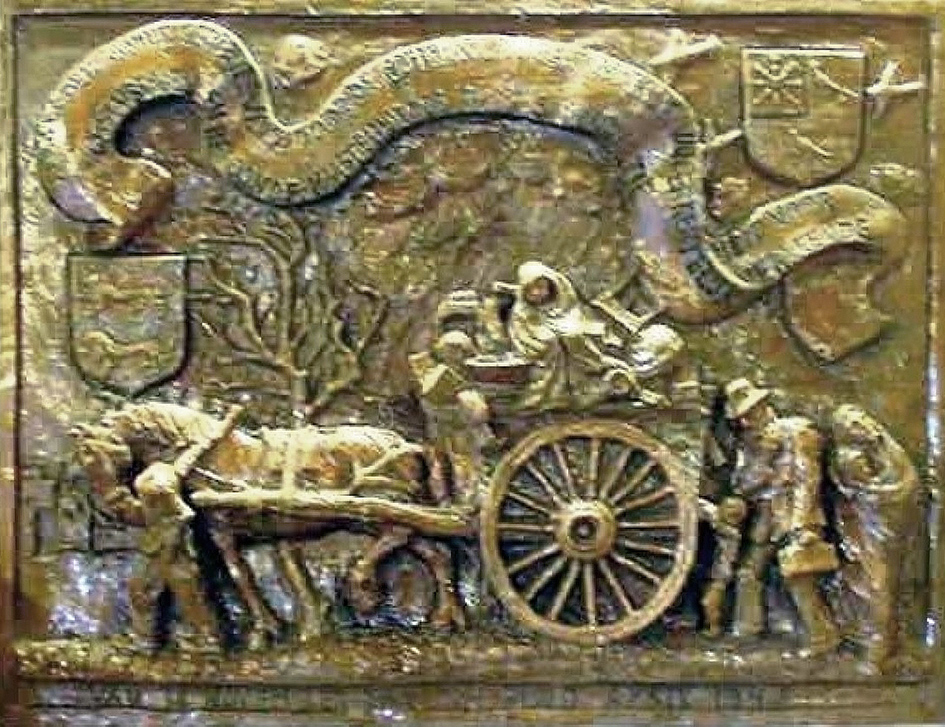
Text on relief: ‘Presented to the municipality of Wisch by the municipality of Duiven as a token of gratitude for hospitality and charity shown during evacuation from November 1944 to the end of April 1945’