
Hans Georg Calmeyer (1903–1972)
‘Jew rescuer’ in German service
Hans-Georg Calmeyer was a German lawyer who played a role as pivotal as it was controversial in the occupied Netherlands during the Second World War. As head of the Entscheidungsstelle (Decision-making Office) in The Hague, he saved thousands of Jews from extermination camps by ‘falsifying’ their ancestry on paper.
Career and the ‘Calmeyer List’
Born in Osnabrück in 1903, Calmeyer established himself there as a lawyer after his studies. In 1940, he was stationed in the Netherlands with the Wehrmacht, but in March 1941, he transferred to the civil administration (Innere Verwaltung). There, he was put in charge of the department responsible for handling appeals regarding Jewish registration.
Jews registered as ‘full Jews’ attempted to prove via petitions that they were, in fact, ‘half-Jews’, ‘quarter-Jews’, or not Jewish at all. Calmeyer was prepared to rule favourably based on evidence that was often fabricated. This led to the creation of the so-called Calmeyer List: a group of individuals whose lives were (temporarily) secured from deportation to camps such as Auschwitz by his signature.
Collaboration with the Resistance
Calmeyer did not work in a vacuum. He consciously relied on a network of experts who forged evidence or devised creative legal constructions:
- The legal network: He worked closely with Dutch lawyers such as Benno Stokvis, Nino Kotting, Jaap van Proosdij, and Martien Nijgh.
- Scientific cover: He endorsed the (pseudo-)scientific reports of anthropologist Arie de Froe, who used anthropometric data to ‘demonstrate’ that Portuguese Jews were not biologically Jewish.
According to historian Dr L. de Jong, Calmeyer was fully aware that many documents were forgeries, yet he continued to accept them despite escalating conflicts with other German agencies.
Figures and Impact
Of the 5,667 petitions submitted to him, Calmeyer granted a positive decision in 3,709 cases. In a country where 96% of deported Jews perished, his actions were quite literally a matter of life and death. However, he also rejected nearly 2,000 requests, contributing to the complexity of his moral legacy.
Post-war Years and Recognition
Following the liberation, Calmeyer was held in Allied captivity for over a year (1945–1946), after which he returned to his legal practice in Osnabrück. It was not until 1974, following the publications of L. de Jong, that his story gained widespread recognition.
- In 1992, he was posthumously honoured as ‘Righteous Among the Nations’ by Yad Vashem, a distinction also awarded to his Dutch helpers Kotting, Van Proosdij, and Nijgh.
- Calmeyer died of a heart attack in 1972 at the age of 69, haunted until the end by the feeling that he had not done enough.
A Disputed Legacy
Despite his rescue efforts, Calmeyer remains a polarising figure. Critics point out that as a cog in the Nazi machine, he also participated in the system that made the Holocaust possible. This tension became clear in 2020 when 200 prominent figures, including Hans Knoop, protested against the naming of a museum after him in Osnabrück.
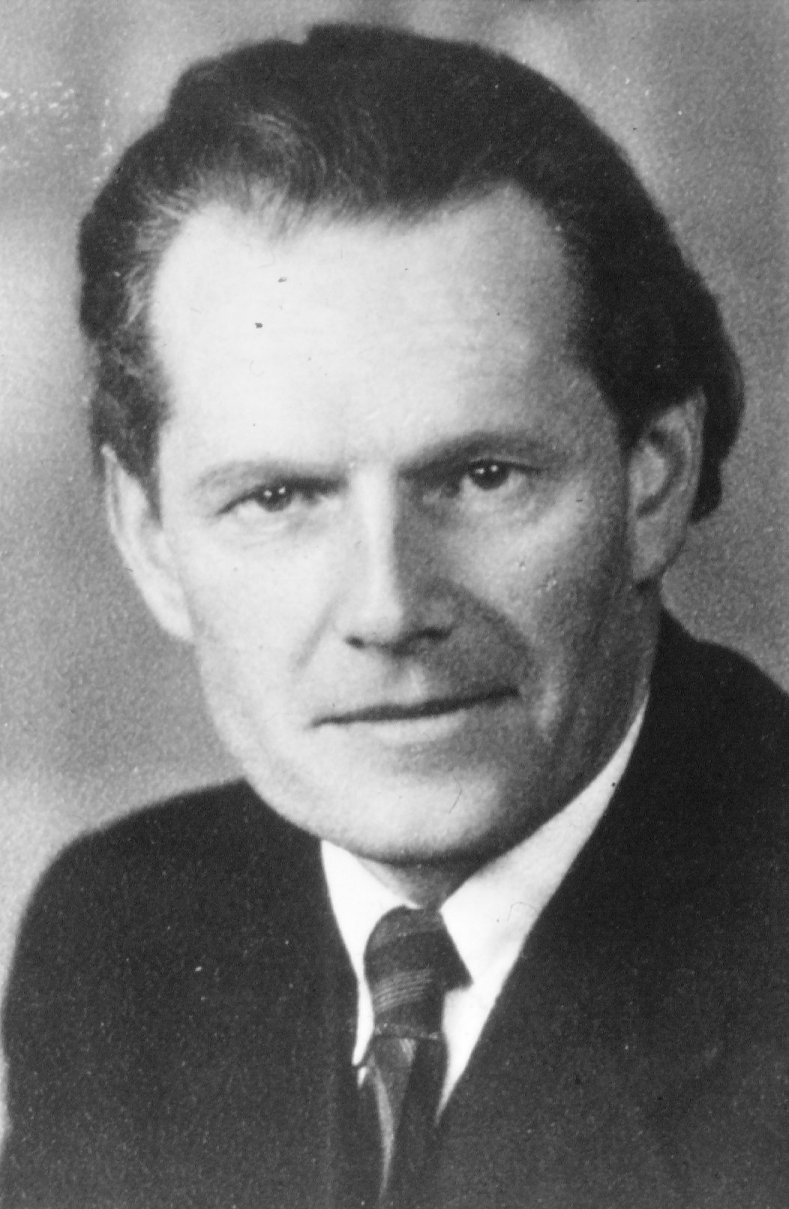
Hans-Georg Calmeyer (1903–1972)
Hans-Georg Calmeyer (1903–1972)