
Max van Dam (1910–1943)
Max van Dam was an exceptional talent whose promising career was brutally cut short by the horrors of the Second World War. As a Jewish artist from the Achterhoek, he left behind an impressive body of work that continued to grow even under the most abysmal conditions in the Sobibor extermination camp.
Great Talent for Drawing and Painting
Max van Dam was born in Winterswijk in 1910. He grew up in a socially engaged, politically ‘red’ family with a strong focus on art, literature, and debate. His talent for painting was discovered early by Jaap Hemelrijk, a close family friend. Thanks to Hemelrijk’s mediation, Max was given the opportunity to further develop his gift.
He attended prestigious academies in Amsterdam and Antwerp. Max proved to be a versatile artist; although he began by painting portraits, he later also turned his attention to still lifes and landscapes. He found inspiration everywhere: in his immediate surroundings in the Netherlands, but also during travels through Italy and France. In 1938, he reached a professional peak in his young career by winning the prestigious Prix de Rome.
‘Of Jewish Blood’
When the Second World War broke out, Max was living and working in a studio in Amsterdam. In 1941, he was officially registered as being ‘of Jewish blood’. From that moment on, his freedom of movement was restricted by the large black ‘J’ in his identity card.
Max decided to go into hiding in Blaricum, but the urge for freedom was strong. Together with the wife and daughter of a friendly couple, he attempted to flee to neutral Switzerland via France. Just before the border, disaster struck: during a check, it was discovered that Max was Jewish. He was arrested and deported via the French camp Drancy to the Sobibor extermination camp.
‘Maler, komm ‘raus’
In Sobibor, Max was confronted with the harsh reality of the extermination machine, but his passion for art proved to be his temporary salvation. He was ordered to create paintings and portraits for the SS guards. While thousands of others were sent directly to the gas chambers, Max was able to spare his life for a few months by painting for his oppressors.
A harrowing moment took place shortly before his death. Max was standing in a line of 72 Dutch men set to be executed following a discovered plot for an uprising. When the notorious SS commander Karl Frenzel spotted Max in the line, he shouted: “Maler, komm ‘raus!” (Painter, come out!). Frenzel pulled him from the queue for the gas chamber, presumably only because his own portrait was not yet finished.
The End in Sobibor
Tragically, the reprieve was short-lived. Around 20 September 1943, only weeks before the major successful uprising in Sobibor on 14 October, Max van Dam was murdered. He was only 33 years old.
Max van Dam is remembered as an artist who held on to his creativity until the very last moment. His story is a powerful example of human dignity and talent in a time of unprecedented darkness.
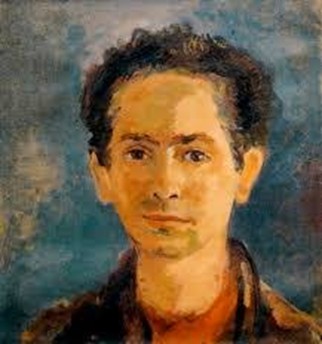
Max van Dam, self-portrait
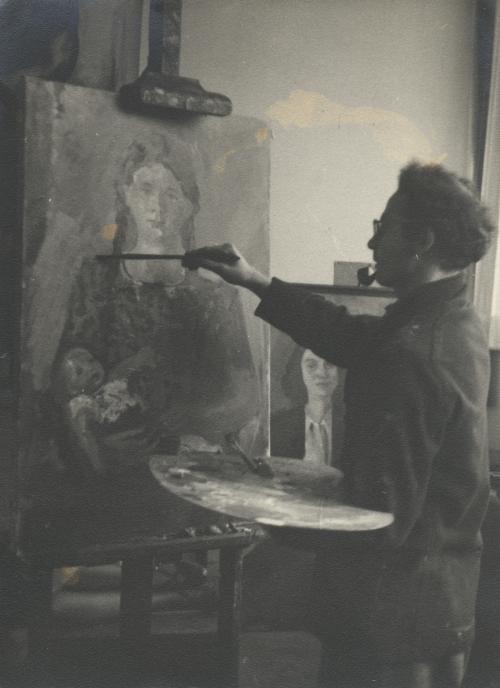
Max van Dam painting a portrait of Hannelore le Coultre, circa 1940. Source: Jewish Museum, Amsterdam