

“Oh, Dearest Annie!”
Kees (“Rakie”) Verheul from Amsterdam, who was one of the people in hiding with the Ebbers family in the Aaltense Heurne during the war, was head over heels in love with the girl next door: Annie Obbink from ‘’t Slaa’ farm. Grada Ebbers and the twins Rieky and Inie Ebbers remember well how smitten he was. At home, and whenever he passed the Obbink farm, he always sang the same song: “Oh Annie, dearest, dearest Annie!” Annie was certainly a charming girl; she was sixteen and had a cheerful nature. She felt she was too young to pay much attention to the boys competing for her affection.
The city boy and the girl next door
The city-boy Kees courted her persistently. Annie’s younger sister, Jo, says that on Annie’s instructions, they would both duck behind the kitchen counter whenever Kees rode past the house on the milk cart with the milkman Ebbers to collect the churns for the ‘botterfabriek’ (butter factory). In a fourteen-page love letter dated 28 May 1944, Kees shared his vision of Annie as a ninety-year-old (written in 2017). However, Kees was out of luck: he did not end up by Annie’s side. Annie is now 86 years old. And as for what she did with the return postage stamp he sent… she can’t quite remember.
The Ebbers sisters are not surprised that Kees wrote such a long letter. At Sinterklaas, he gave them gifts accompanied by self-written poems. He had a unique sense of humour. He was also fond of the Ebbers twins, who were toddlers then. They often sat on his knee while he rocked them back and forth, chanting “Sweet Rikie, sweet Inie” for hours on end.
Annie says herself: “On our farm and on all the surrounding farms, there were people in hiding. On 11 May 1944, there was a party in the neighbourhood because Hendrik Veldboom married Hanna Bussink. Everyone from the neighbourhood went to that party, only Bertus Smit had no invitation and asked me if he might come along with me. I agreed. This caused a stir. Kees Verheul and a few others were possibly jealous.”
Fearful war years on the farm
In that spring, Annie was only sixteen years old and not really interested in boys at all. She found the war, above all, a very fearful time. “In 1942, our farm burned down and was partly rebuilt during the war.”
In 1945, a bomb caused an enormous crater just two metres from the front wall. Not much later, another bomb fell right next to the house, just after my mother had pulled me inside in the nick of time! I can still remember the bang and the whistling sound of that bomb. Nothing was left of the garage containing the carriage. The car itself had already been requisitioned by the Germans at the start of the war. My biggest worry was that our family would stay together. After the fire in 1942, we were temporarily housed in seven different places.
On 18 July 1944, I passed my Mulo exams in Arnhem. Then came the railway strike in September, making all transport to and from the west of the Netherlands impossible. The war became increasingly tense and difficult.”
A missed encounter on the ‘dieksken’
The neighbour’s boy, Gerhard Ebbers, who was a year below her at school, occasionally handed Annie notes from Kees. Annie read them in the toilet during breaks. She had no interest in starting anything with him. He wrote the poem “Annie, may you pass your exams” before he penned the ultimate fourteen-page love letter.
Annie further recalls that she did agree to a meeting once. They were to meet in the evening on the “schuune dieksken”, the path connecting the Ebbers farm with ‘t Slaa. She stood there in the pitch dark for at least fifteen minutes, but Kees never showed up. She soon went back home; she didn’t mind because she didn’t want anything from him anyway. Apparently, Kees had been waiting for her at a different spot on the path.
Grada Ebbers explains that part of the path was known as the “braomdieksken” (Broom Path), a track lined with yellow-flowering broom where no one ever went. Perhaps Kees waited there? Annie believes she did send a reply to his long letter via Gerhard Ebbers. Something along the lines of: thanks for the effort, but I’m not interested.
Life after the liberation
After she passed her exams and the railway strike began, Kees never wrote to her again. The war became harder and more terrifying.
The Ebbers sisters recount that during his time in hiding—when he dared to take the train to Amsterdam to see his parents—Kees was arrested and deported to Germany. He later returned to the Ebbers farm, severely emaciated. After the war, married to Agnes, he often visited Aalten with his wife and later his children. Even later, after his divorce, he would occasionally turn up unexpectedly in Aalten. Kees Verheul (born 9-8-1925) passed away on 28 January 1981 in France. The Ebbers family is still in contact with Kees’s sister and his children.
In 1955, Annie Obbink married the widower Hendrik Jan Avink from Haarlo, who had been one of the people in hiding at ‘t Slaa farm in 1944. After his death in 1958, she remarried Jan Lohuis in 1961. Since her marriage to Jan, she has lived on the Loohuis farm on the Haart in Aalten.
Source: Letters from Kees Verheul, interview with Annie Lohuis-Obbink, and information from the sisters Grada, Rieky, and Inie Ebbers, December 2013.
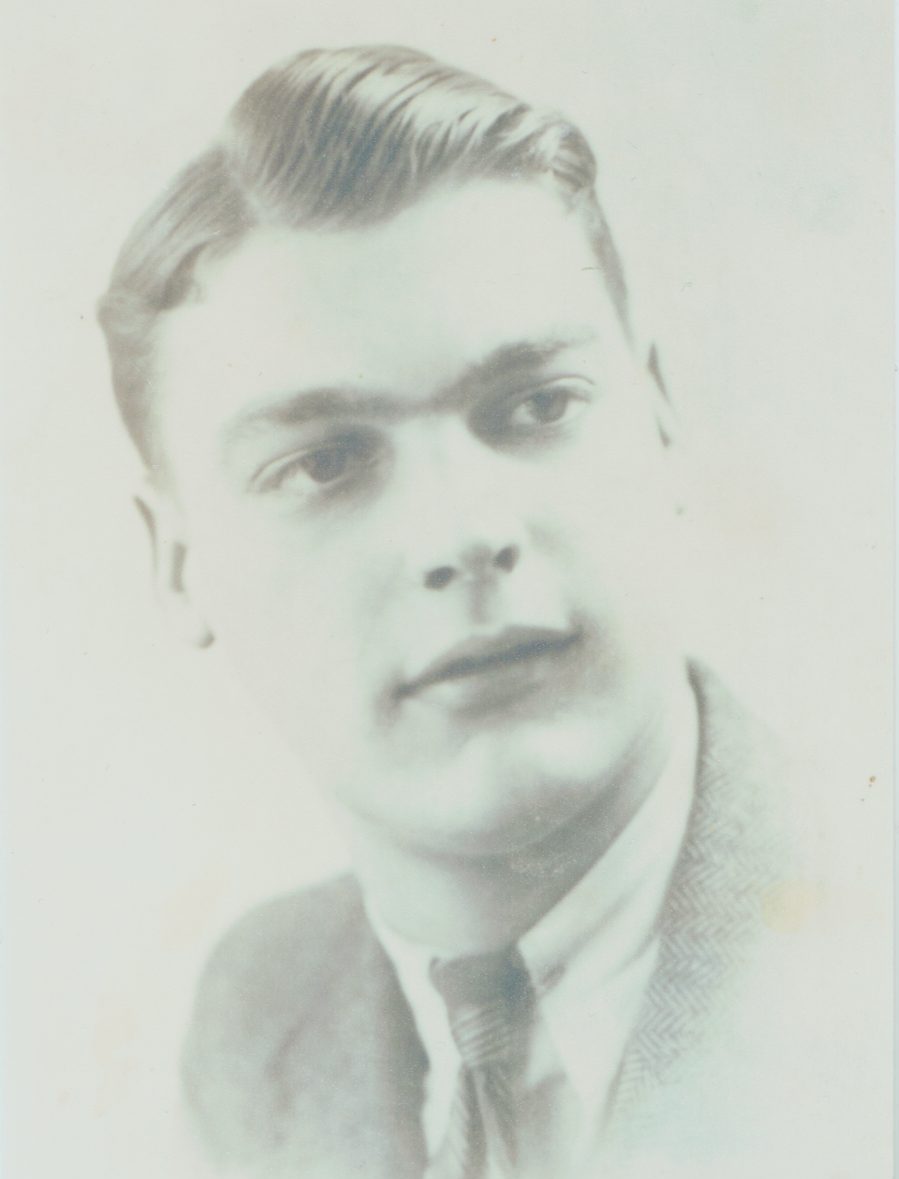
Kees Verheul