

Tante Riek en Gradus Kobus
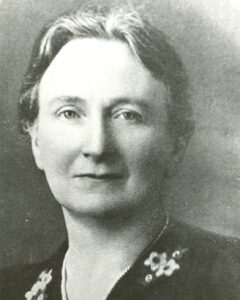 It is clear from all the stories about going into hiding that the network for assisting people in hiding was vital. People trusted one another and knew how to find each other. But there is more: much can be said about the roles of the veterinarian and Mayor Bos of Winterswijk. Precisely in that situation, it is remarkable that in this town, great resistance leaders rose up against the regime. They were ordinary people who resisted persecution and oppression.
A conversation between Helena Theodora Kuipers-Rietberg (alias Tante Riek) and Pastor Fredrik Slomp (alias Frits de Zwerver) after his sermon in Winterswijk in October 1942 is generally seen as the moment the National Organisation for Aid to People in Hiding (LO) originated. Heleen and Piet Kuipers took action against the Nazis immediately after the occupation. They tirelessly helped Jews, those refusing forced labour, English pilots, and many others in difficulty. Both had to go into hiding but were betrayed and taken to the Koepel prison in Arnhem. Piet survived the war. Heleen was sent via Kamp Vught to the Ravensbrück women’s extermination camp, where she died at the end of December 1944. A fellow prisoner said of her: “She always knew how to make something out of the limited possibilities and spread love and warmth around her.”
Much earlier – in 1933 – the Winterswijk resident Gradus Kobus (born 1879) saw the danger of Nazism from across the border. He chose communism because he expected that this party would do the most for the least fortunate. He and his wife lived extremely soberly so they could give to others. His house and local shop were located in Meddo, close to the border. This place later became a centre for illegal activities. As early as 1933, he actively helped fleeing communists and socialists who had to lead an illegal existence in the Netherlands. This brought him into conflict with both the Dutch and German authorities. He was arrested on 25 June 1941, along with hundreds of other communists. Via Kamp Schoorl and Kamp Amersfoort, he ended up in Neuengamme. He died there on 22 February 1942 (how or of what is not known). A few days earlier, he was forced to write to his wife in German: “Ich bin gesund und munter” (I am healthy and cheerful).
Another story from the Winterswijk border concerns the Jewish Humberg family. Wilhelm Humberg and his wife Rosetta Menko moved to Winterswijk in 1933. When their flight to England failed, they returned. They received an exemption from deportation from the NSB Mayor Bos until after April 1943 but went into hiding at the Gossink farm in the hamlet of Henxel. There they were discovered by the Nazis and taken via Westerbork to Auschwitz.
The Heimatverein Dingden has reconstructed the stories of all members of the Humberg family during the Second World War. Their history is told in the Humberghaus in Dingden, a monument where one can learn and reflect on the past, present, and future. Sometimes things ended better, although even then the war had a great impact on the rest of their lives. Such was the case for Wim Harmelink, a Rijksduitser (German national living abroad) who was called up but deserted and went into hiding. The events after the war speak for themselves. In 1946, his family was deported to Germany via a camp for Rijksduitsers. They fought for years to get their farm in Ratum back. In 1950, Wim married in Winterswijk, and in 1955, he finally obtained Dutch citizenship. However, the bitter experiences have left indelible marks on the family and their descendants to this day.
Landelijke Organisatie voor Hulp aan Onderduikers (LO)
The LO (National Organisation for Aid to People in Hiding) was born in the Achterhoek. Resistance leader of the Achterhoek Jan Wikkerink (alias Ome Jan) wrote after the war: “The Achterhoeker shows a tough persistence as soon as he has had enough.” The helpers considered it their Christian duty to offer shelter to others and thus offer resistance to the Nazis. It is not without reason that the LO was born through the combined strength of courageous people from the Achterhoek such as Tante Riek, who maintained close contact with Ome Jan. The network branched out quickly into a broad and efficient national aid organisation, partly due to the inspired and recruiting sermons of Pastor Fredrik Slomp. Many of the collected stories show that those in hiding felt safe with their host families. They noticed that German soldiers at the door were convincingly outwitted. But above all, people were exceptionally good at keeping their mouths shut. Often even towards family and neighbours. Children, too, were thoroughly taught the art of ‘hearing, seeing, and keeping silent’.
Many, however, did not survive the war, such as Tante Riek, Gradus Kobus, Doctor Der Weduwen, Cornelis Ruizendaal alias Zwarte Kees, the 46 men executed at the Rademakersbroek near Varsseveld, the pilots, and those who perished in bombings, were arrested, or murdered in the camps, and the indescribable murder of the Jewish citizens. Many were also saved by going into hiding or through luck and coincidence. The National Resistance Museum possesses many of these stories, along with objects from that time.